about
This project develops a real-time operational tool for the Philadelphia Office of Homeless Services and the Fair Housing Commission to transition eviction response from reactive crisis management to predictive intervention. Currently, city resources like legal aid and rental assistance are often deployed only after filing volumes spike. The objective of this workflow is to forecast monthly eviction filing counts at the census tract level, enabling the city to proactively allocate limited personnel and financial resources to specific neighborhoods before landlord-tenant tensions escalate into legal proceedings.
The analysis utilizes R to construct a predictive pipeline based on Negative Binomial regression, selected to handle the over-dispersed and zero-inflated nature of eviction count data.
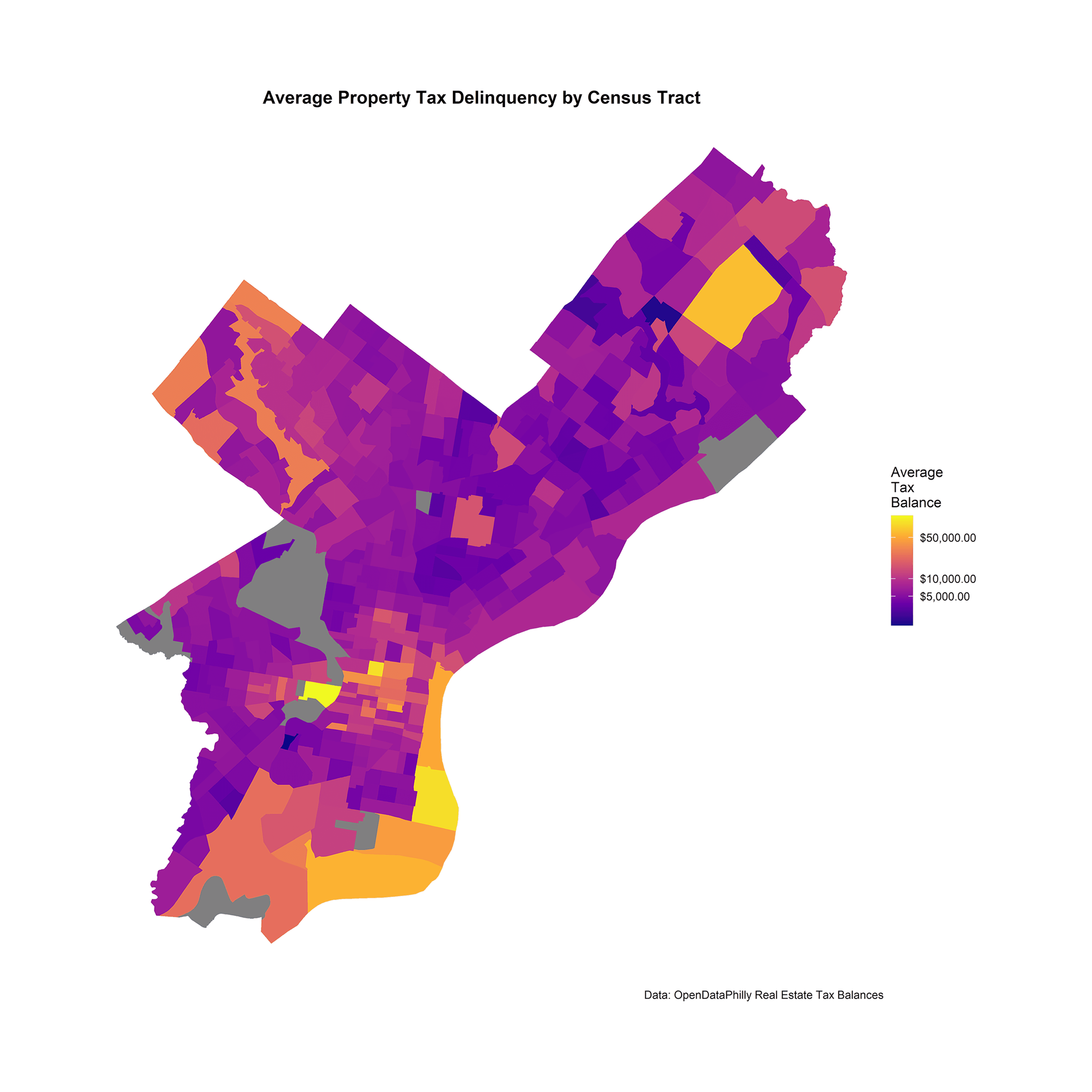
Data Fusion: The model integrates proprietary filing data from The Eviction Lab with municipal property tax delinquency records (serving as a proxy for landlord financial stress) and socioeconomic indicators from the American Community Survey (ACS).
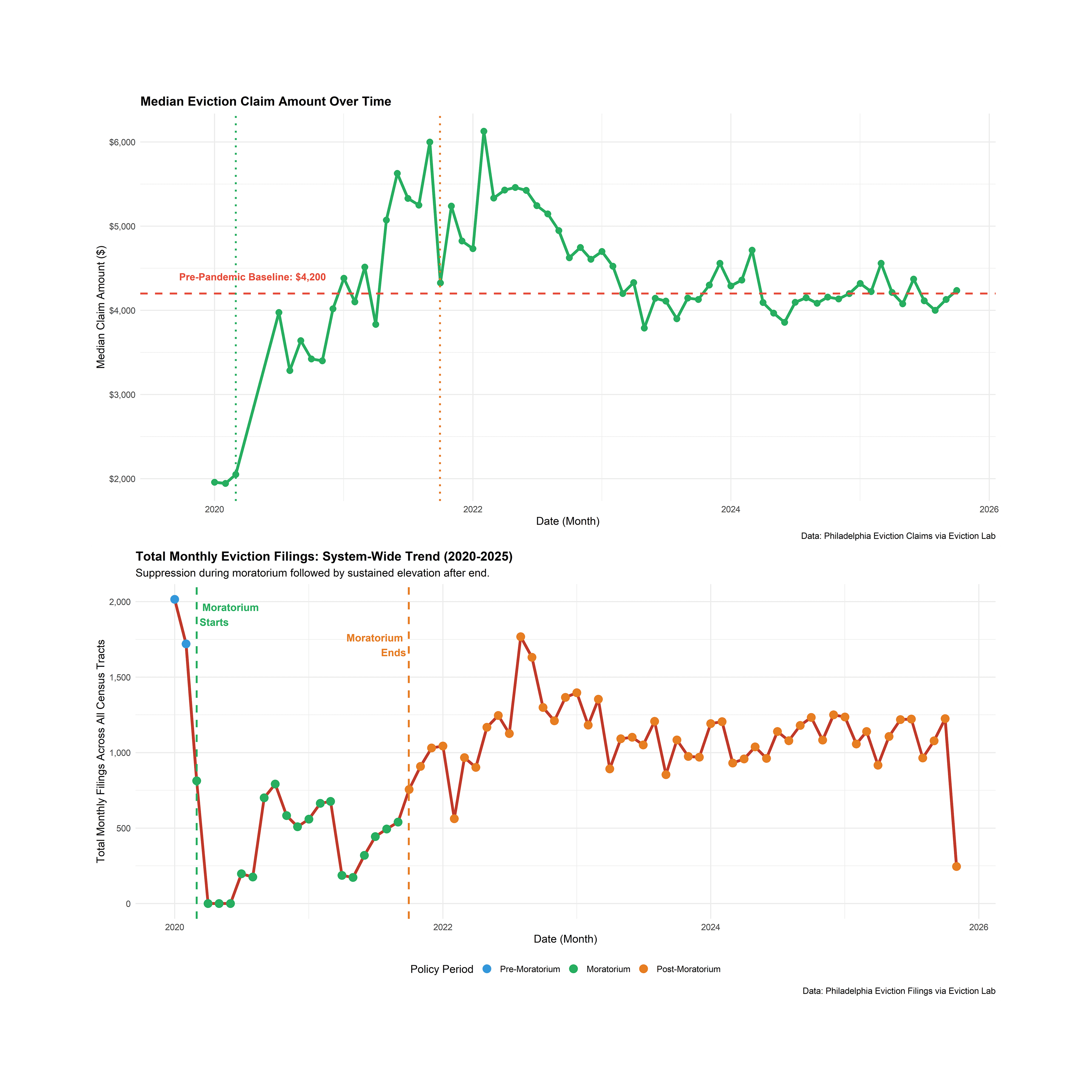
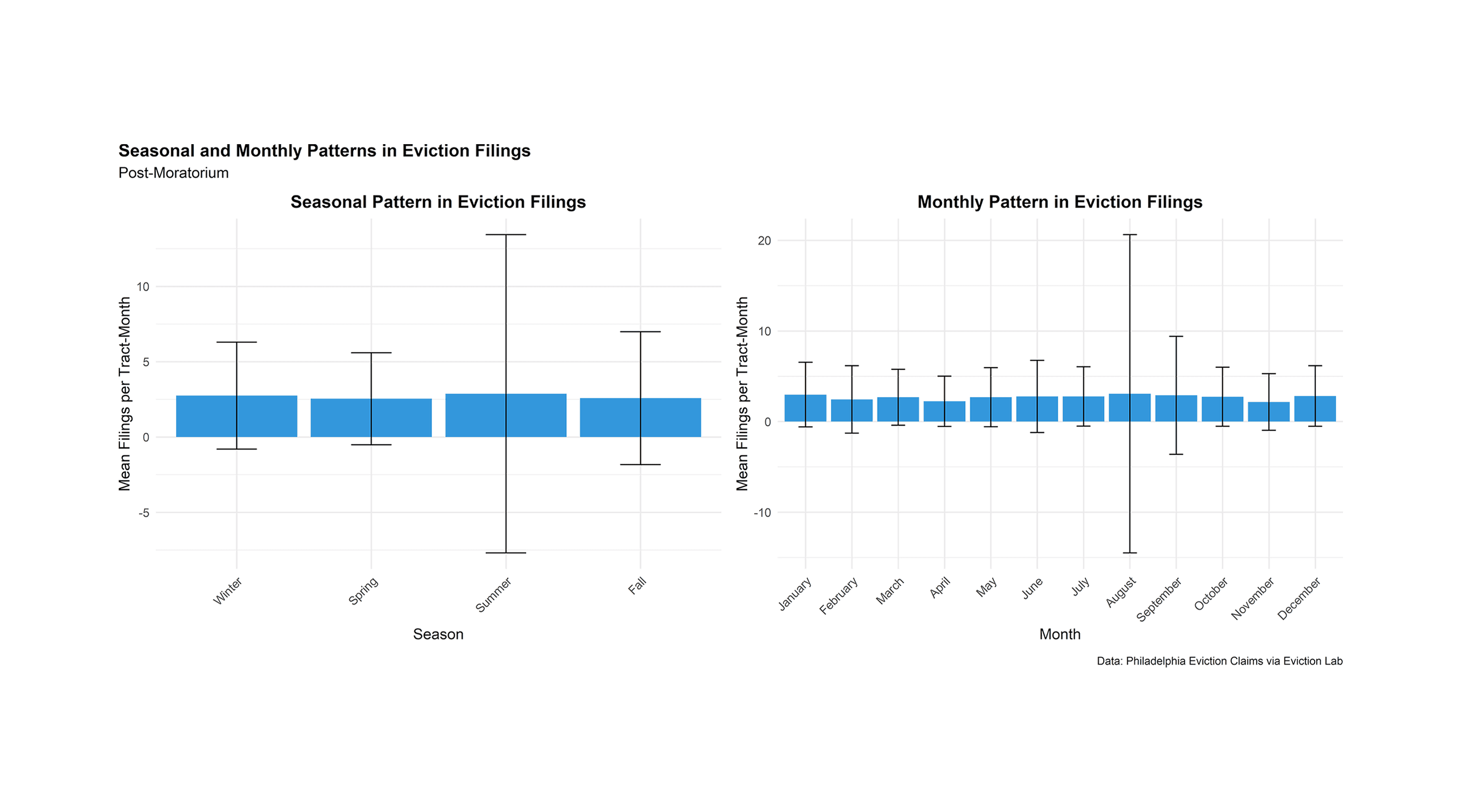
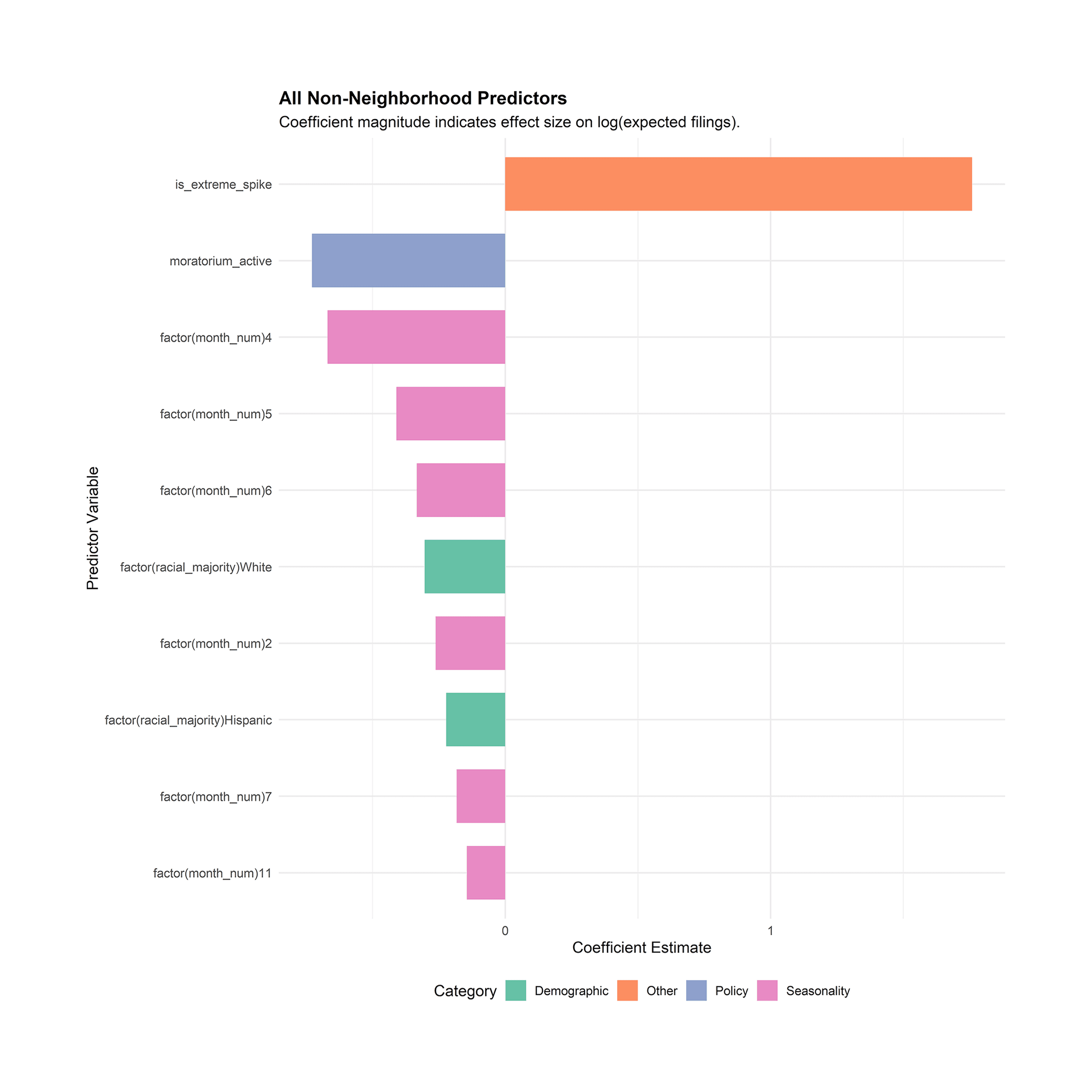
Feature Engineering: Key predictors include temporal momentum (rolling averages of past filings), spatial spillover effects (calculated via Queen contiguity weights), and policy interaction terms to account for the eviction moratorium's varying impact across demographics.
Robust Validation: To ensure real-world applicability, the model was validated using a strict temporal split: training on data through 2023 (with outlier capping to prevent overfitting to mass-displacement events) and testing on unseen 2024–2025 data.
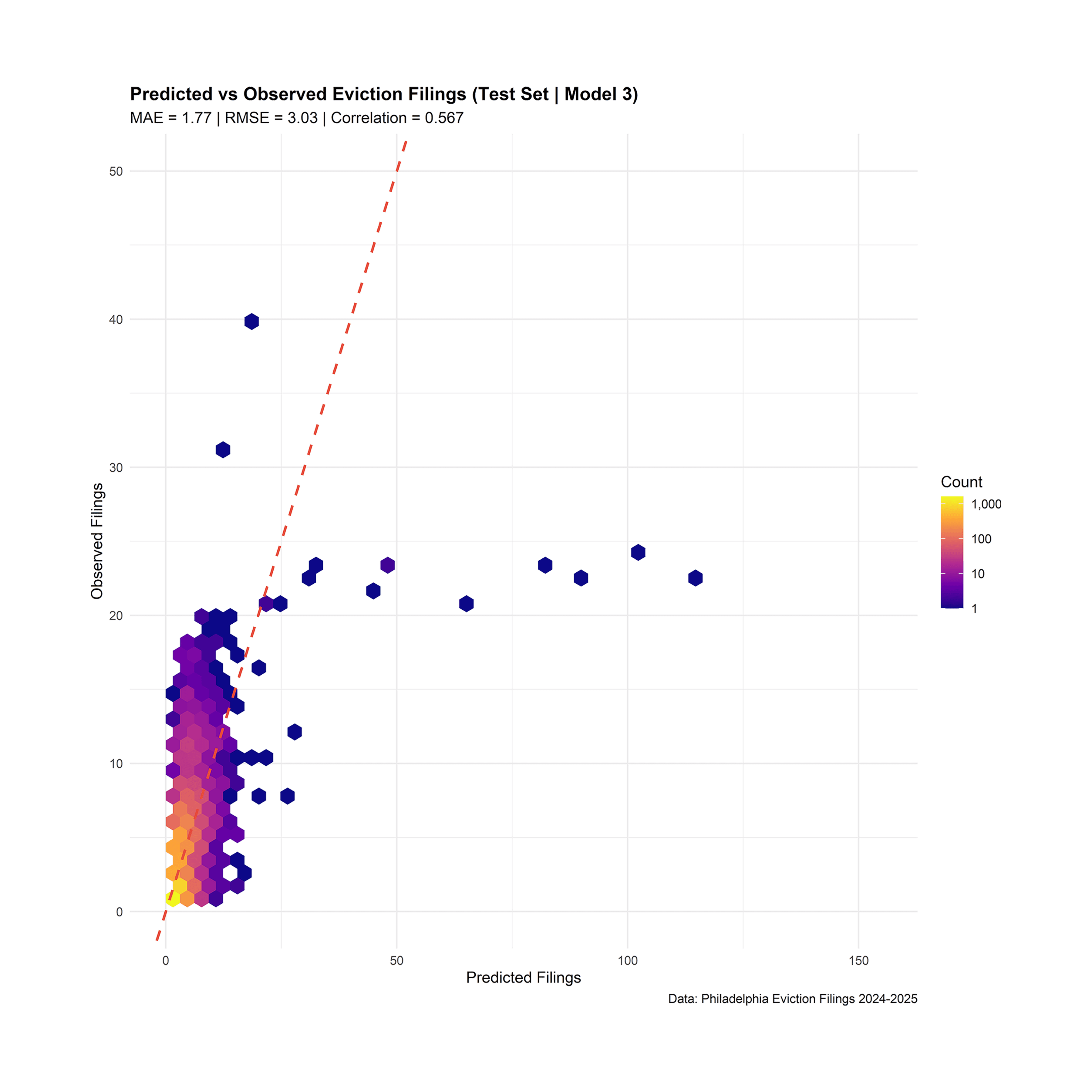
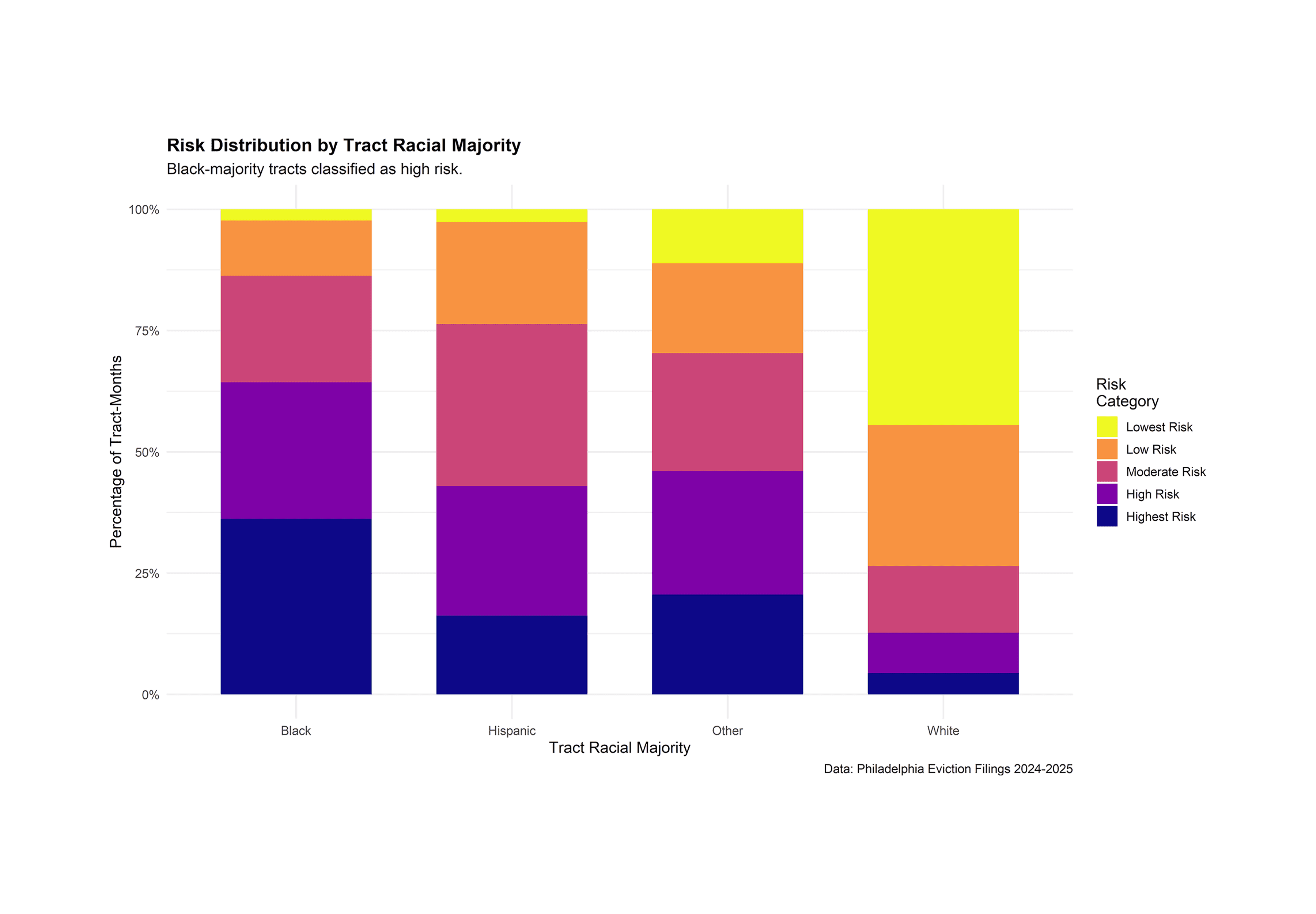
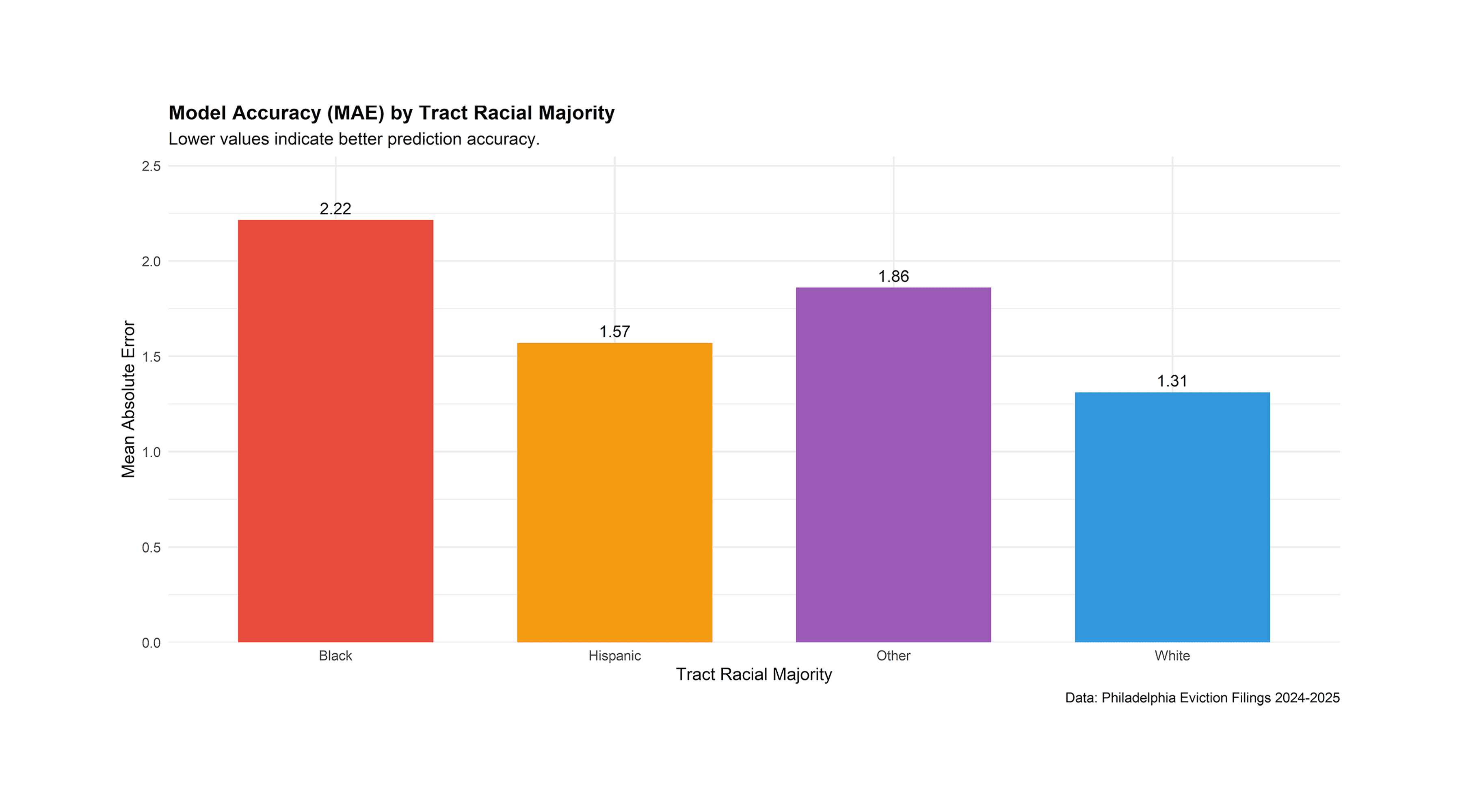
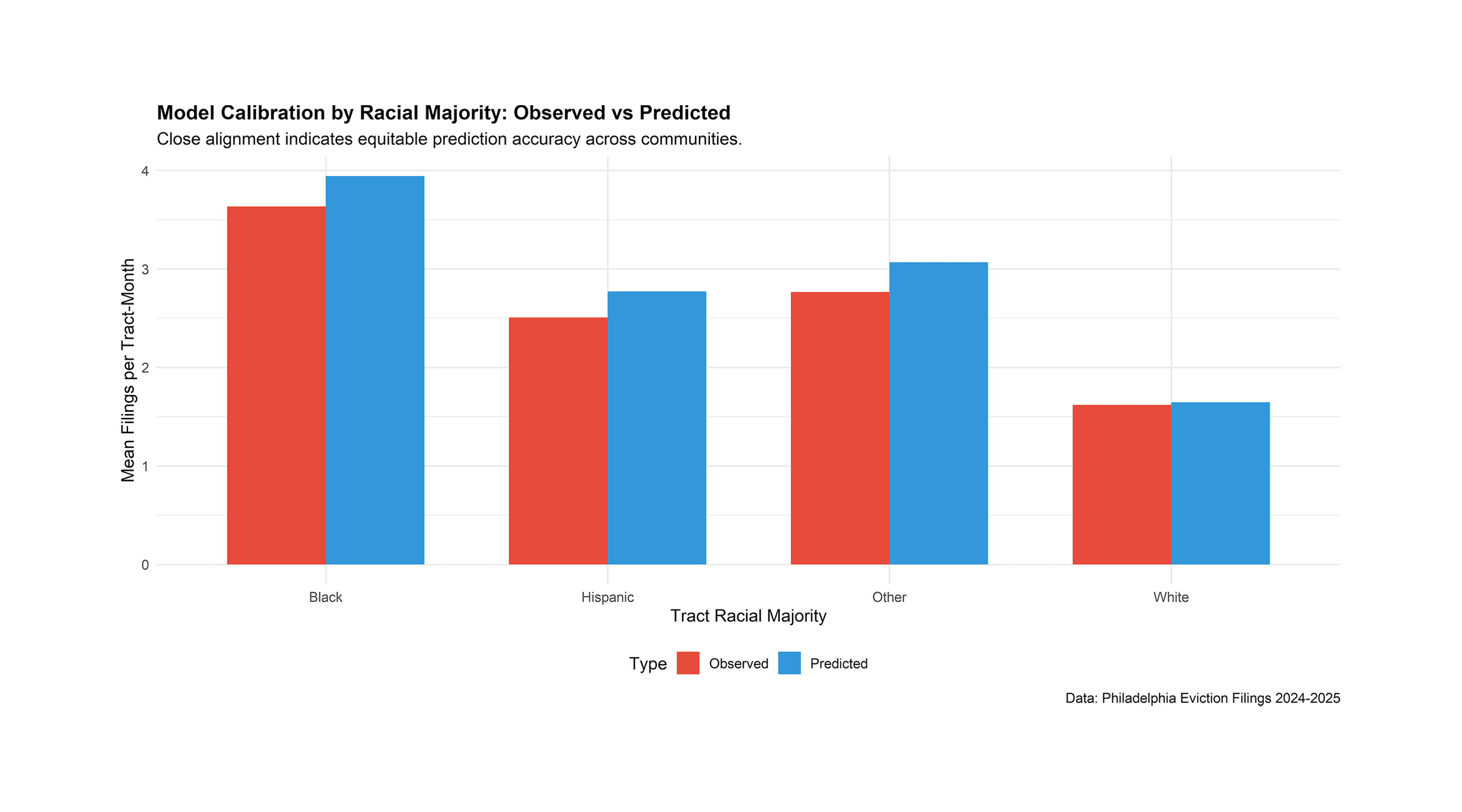
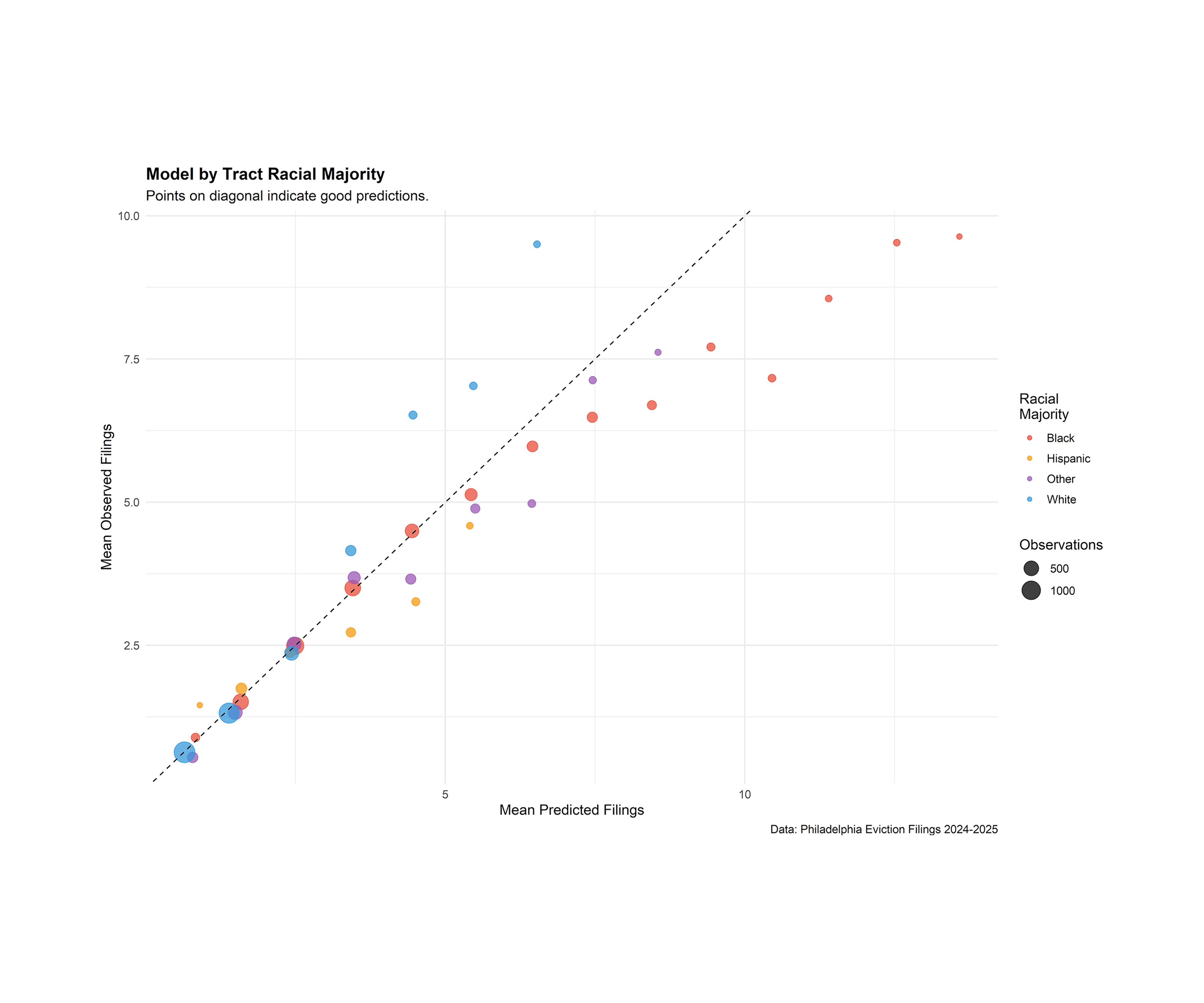
The selected model achieved a mean absolute error (MAE) of 1.77 filings, successfully generalizing to future periods without significant overfitting. Statistical analysis revealed that landlord tax delinquency and spatial lag (evictions in neighboring tracts) are significant predictors of future filings, confirming that housing instability is often a systemic, neighborhood-level phenomenon rather than an isolated event. Furthermore, the analysis highlighted stark racial disparities: Black-majority census tracts accounted for 51.9% of all filings despite comprising a smaller share of the city's geography, and the model exhibited higher error rates in these areas, suggesting complex structural factors at play.
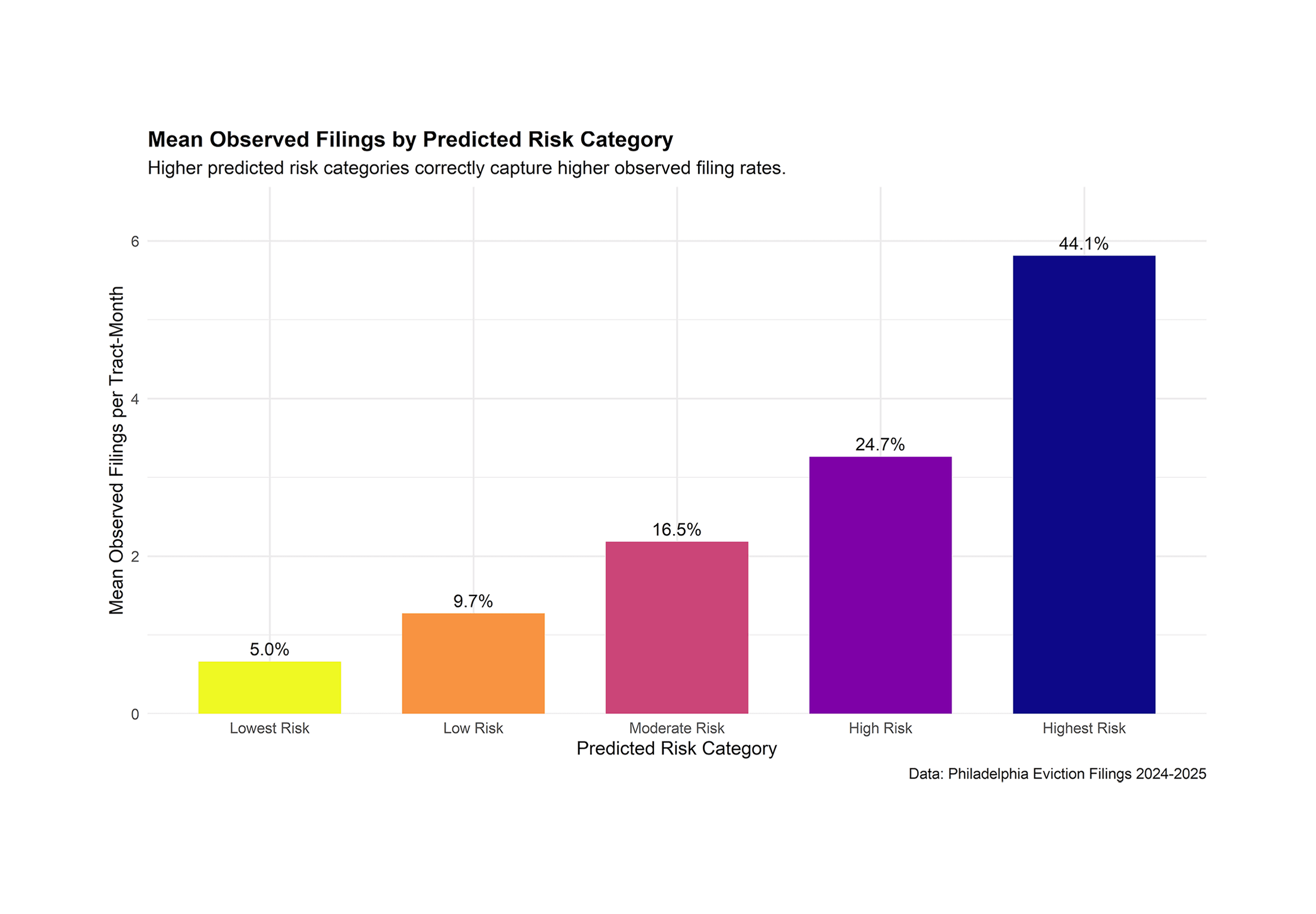
This workflow functions as a decision-support engine for municipal agencies. By classifying census tracts into risk quintiles (e.g. "Highest Risk"), the tool allows officials to target supportive services—such as public knowledge dashboarding, automated email integration, canvassing aid, mobile legal clinics, or direct cash assistance—precisely where they are needed most. The project emphasizes equity-centered implementation, explicitly recommending that predictions be used solely for resource distribution and support services, never for punitive enforcement, to avoid exacerbating the disparities identified in the modeling process.
Role
Tess Vu
Angel Rutherford
Ixchel Ramirez
Client
Philadelphia Office of Homeless Services, Fair Housing Commission
Keywords
Dashboard, Negative Binomial, Poisson, Practical Applications, Predictive Modeling, Risk Assessment, Urban Analytics, Email Integration, Workflow Improvement
other works