about
Hot Hẻm: Sài Gòn Giữa Cái Nóng Hổng Công Bằng—Saigon in Unequal Heat
A GeoAI initiative designed to operationalize pedestrian heat exposure in Hồ Chí Minh City (HCMC), Vietnam. While traditional routing algorithms prioritize speed or avoidance, this project inverts the standard paradigm to identify the hottest routes to highlight systemic infrastructure failures rather than simply placing the burden of heat avoidance on pedestrians. By focusing on the micro-scale thermal experience often missed by satellite imagery alone, the project aims to provide municipal planners with a data-driven foundation for targeting heat mitigation interventions, such as tree canopy expansion and shaded corridor development.
The workflow utilizes a patchwork spatial data science pipeline that fuses street-level computer vision with city-scale remote sensing.
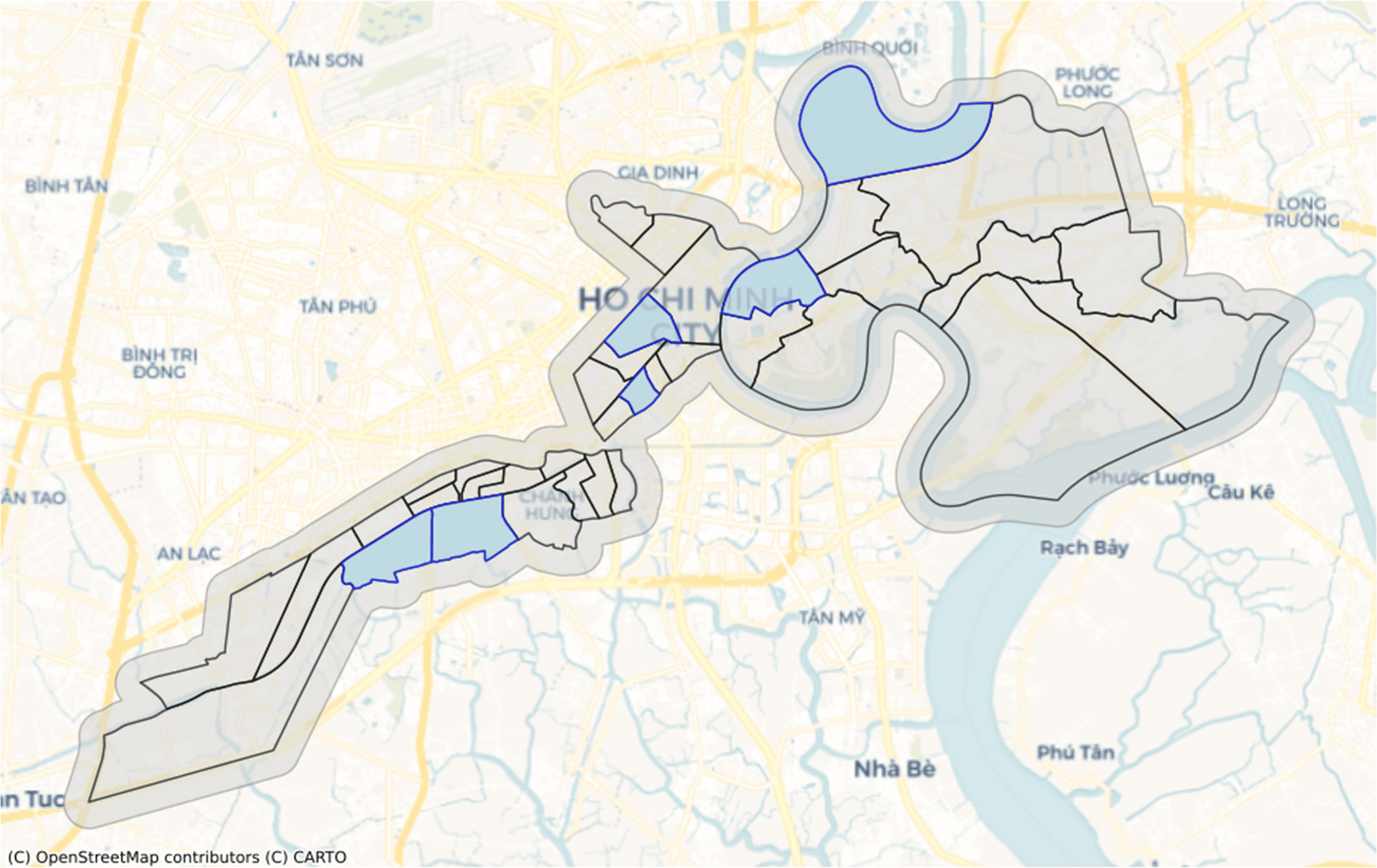
Data Ingestion: The system integrates Land Surface Temperature (LST) and emissivity data from Landsat 8/9, structural radar data from ALOS PALSAR-2, and elevation models from ALOS World 3D. This is combined with Google Street View (GSV) imagery to capture human-scale morphology.
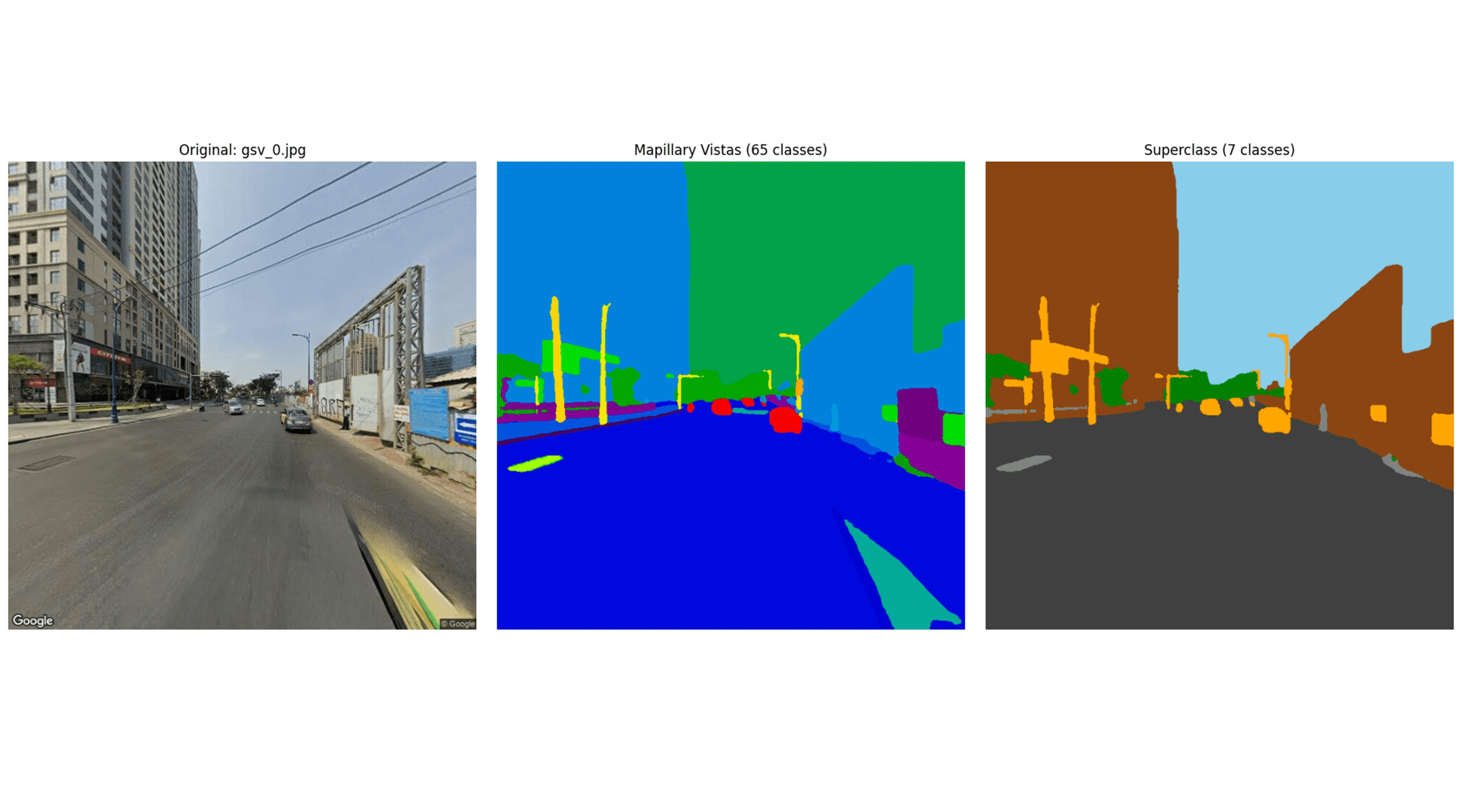
Computer Vision: Using Mask2Former, GSV images are segmented into semantic superclasses (e.g. sky, building, vegetation, pavement) to quantify the visual thermal environment.
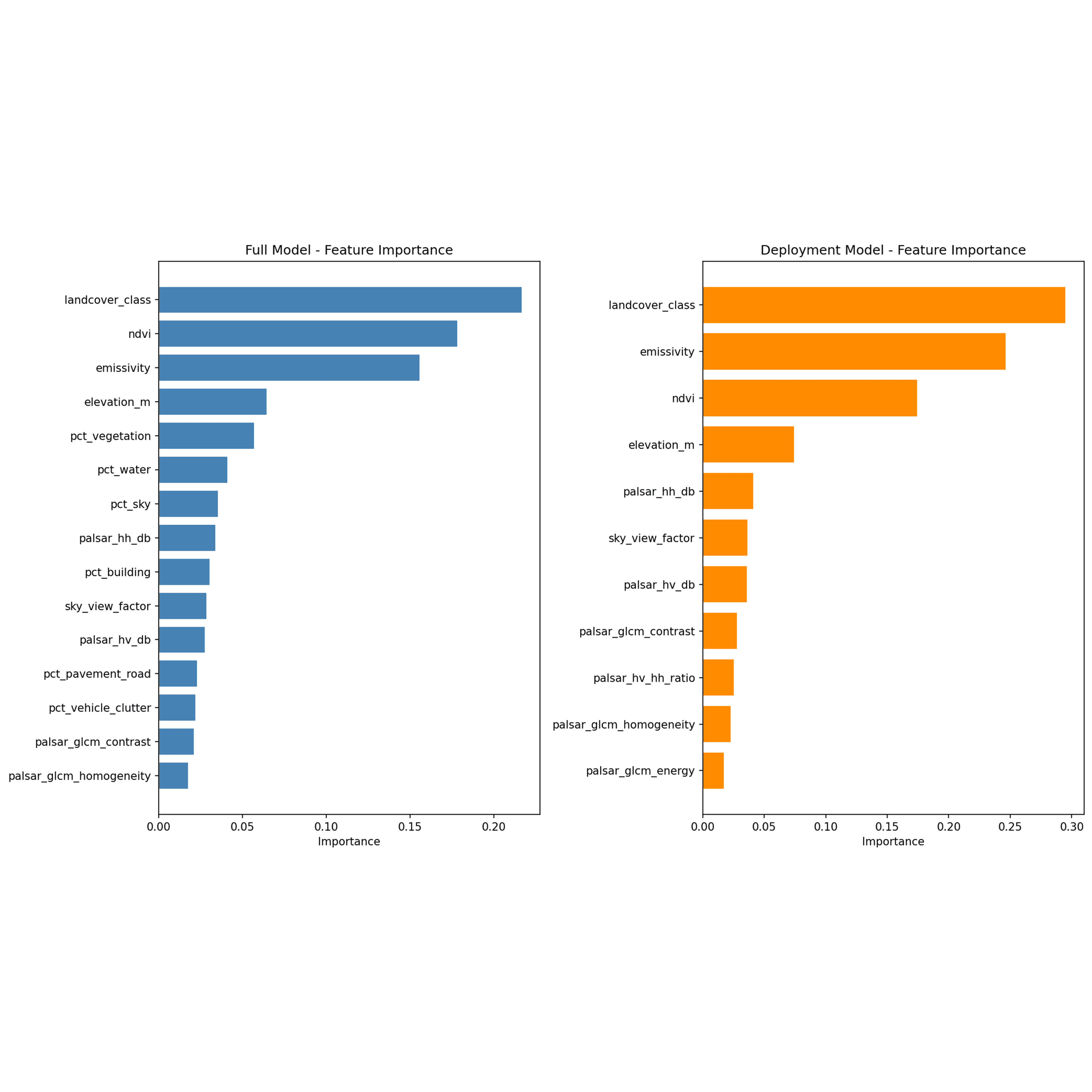
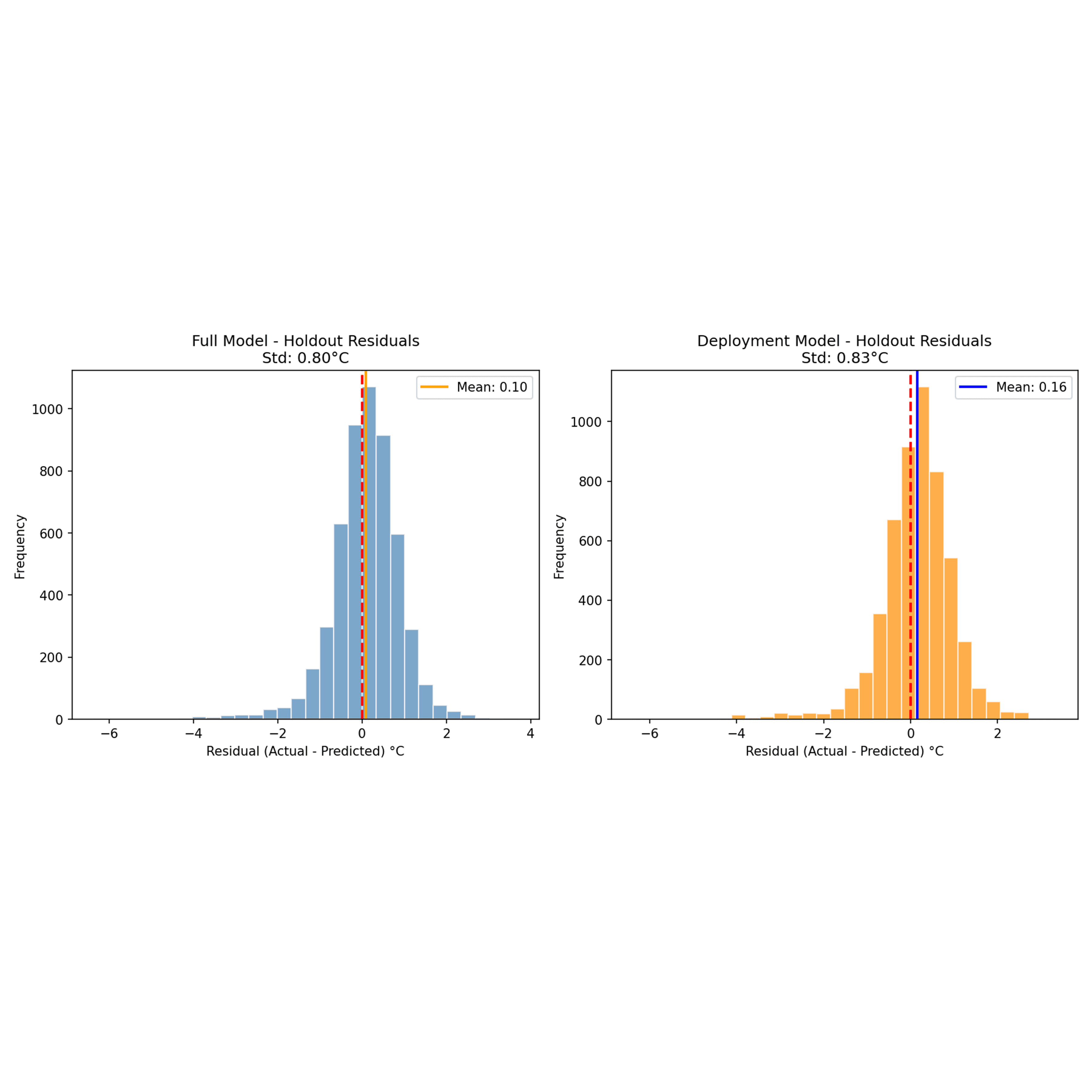
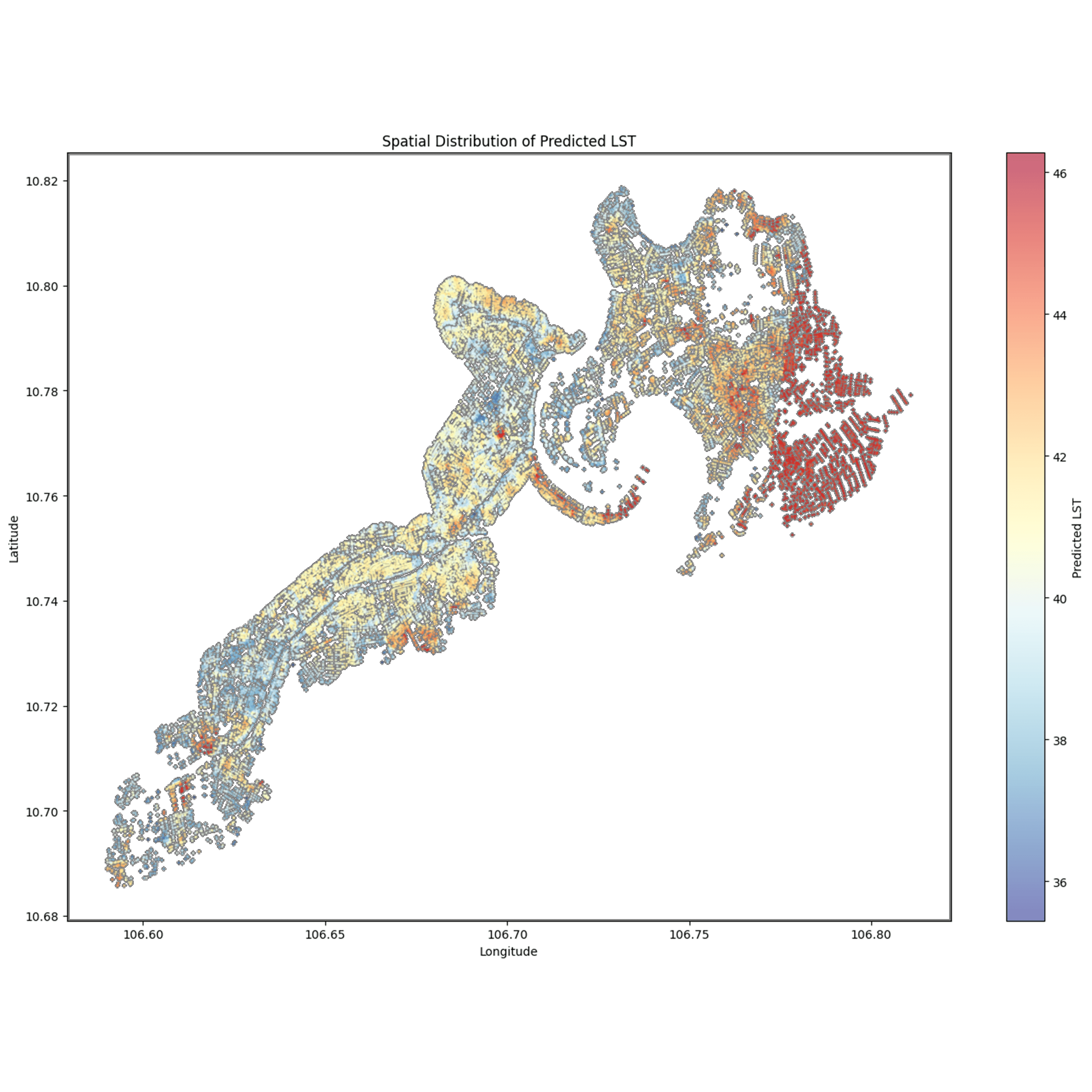
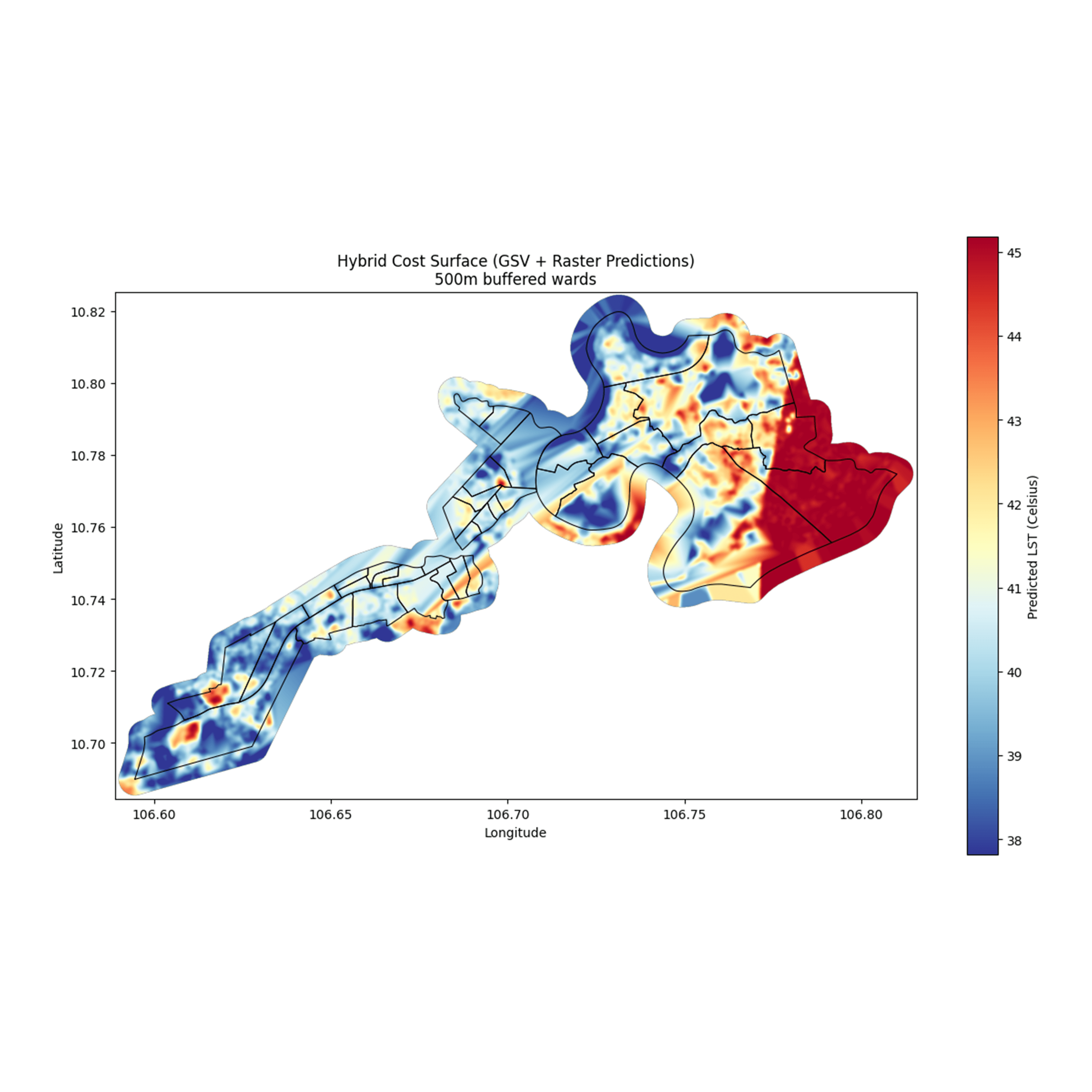
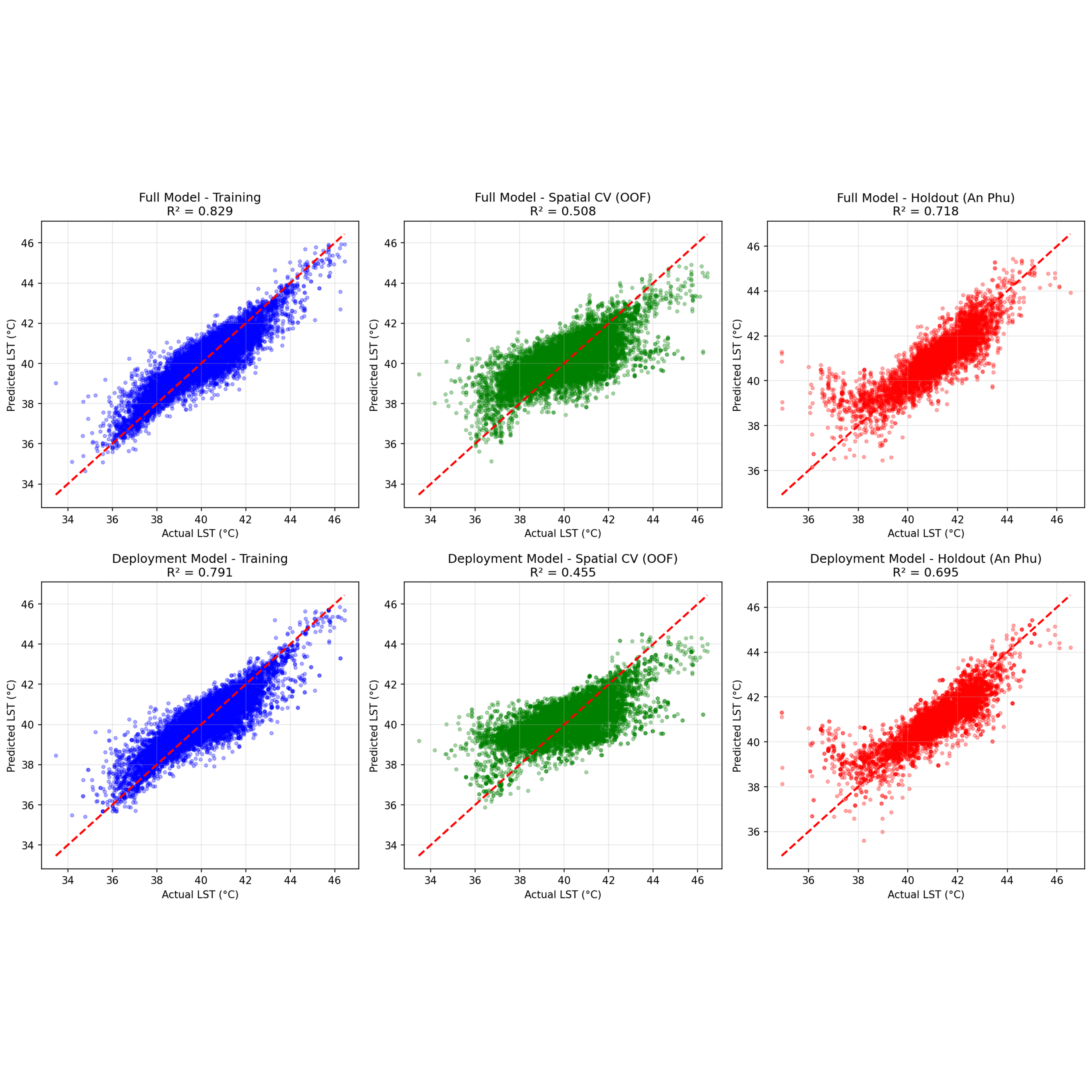
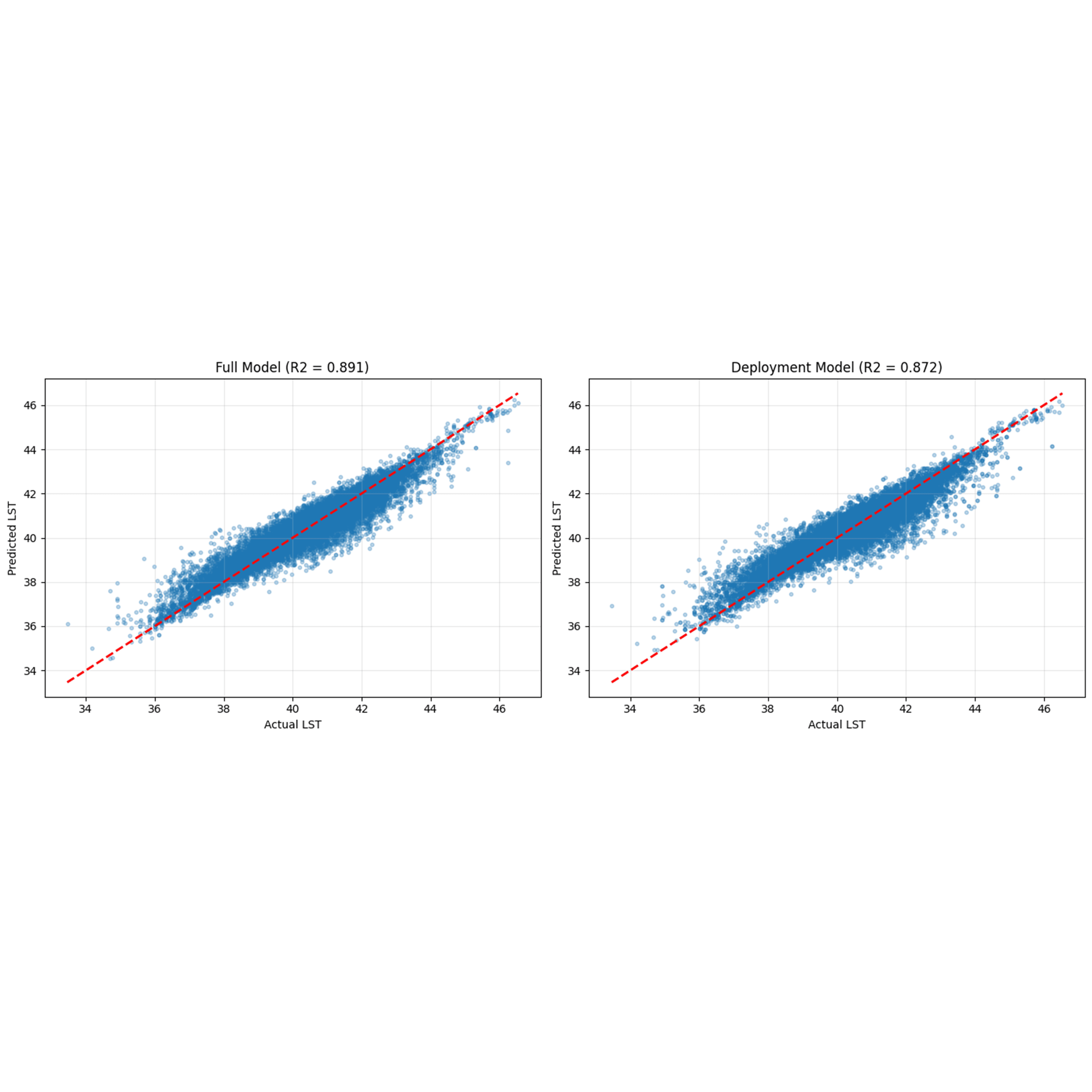
Machine Learning: Two XGBoost models were developed: a Full Model trained on both satellite and street-view features for high-precision areas, and a Deployment Model relying solely on satellite rasters to extrapolate predictions across the entire city where GSV data is unavailable or cost-prohibitive.
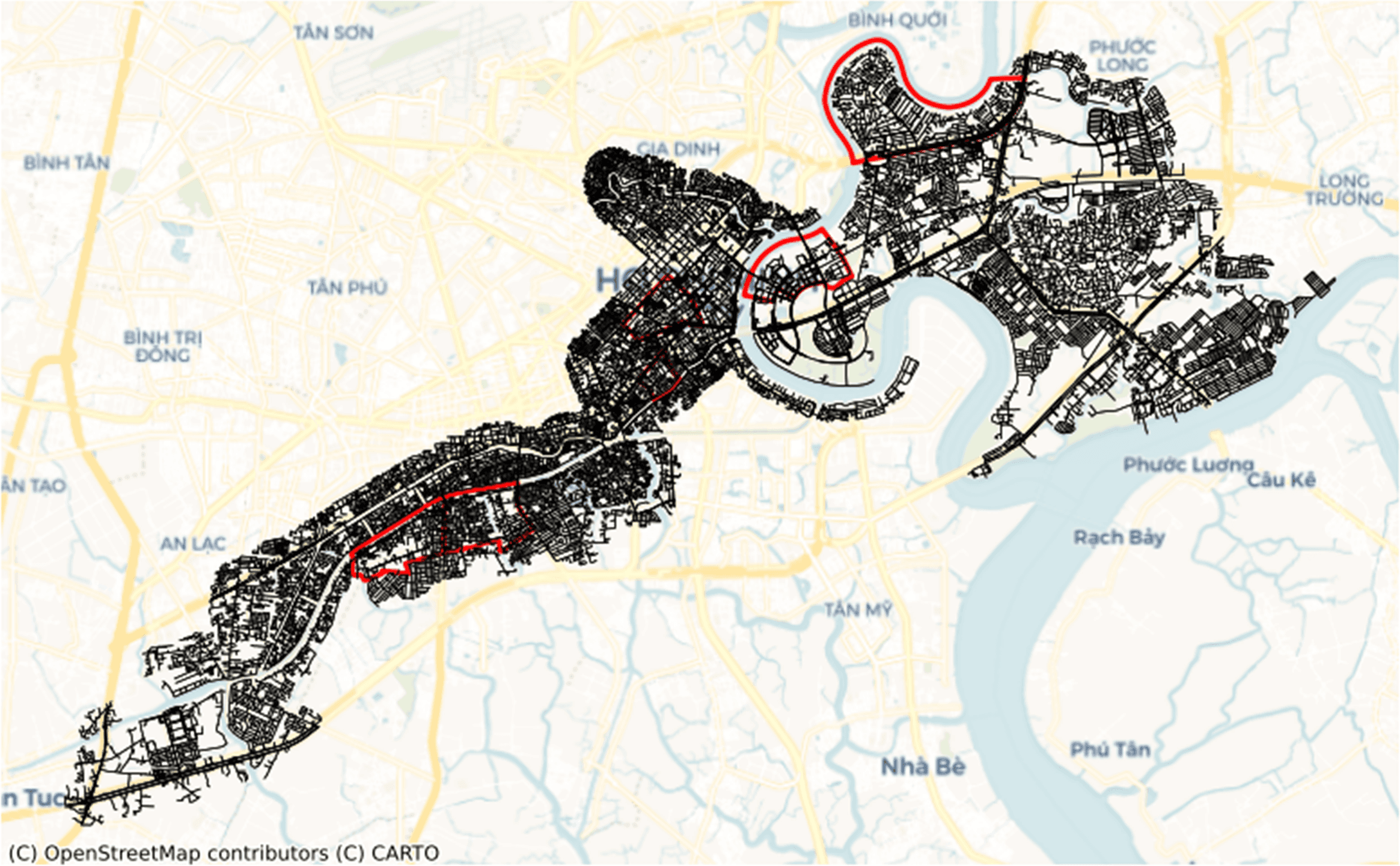
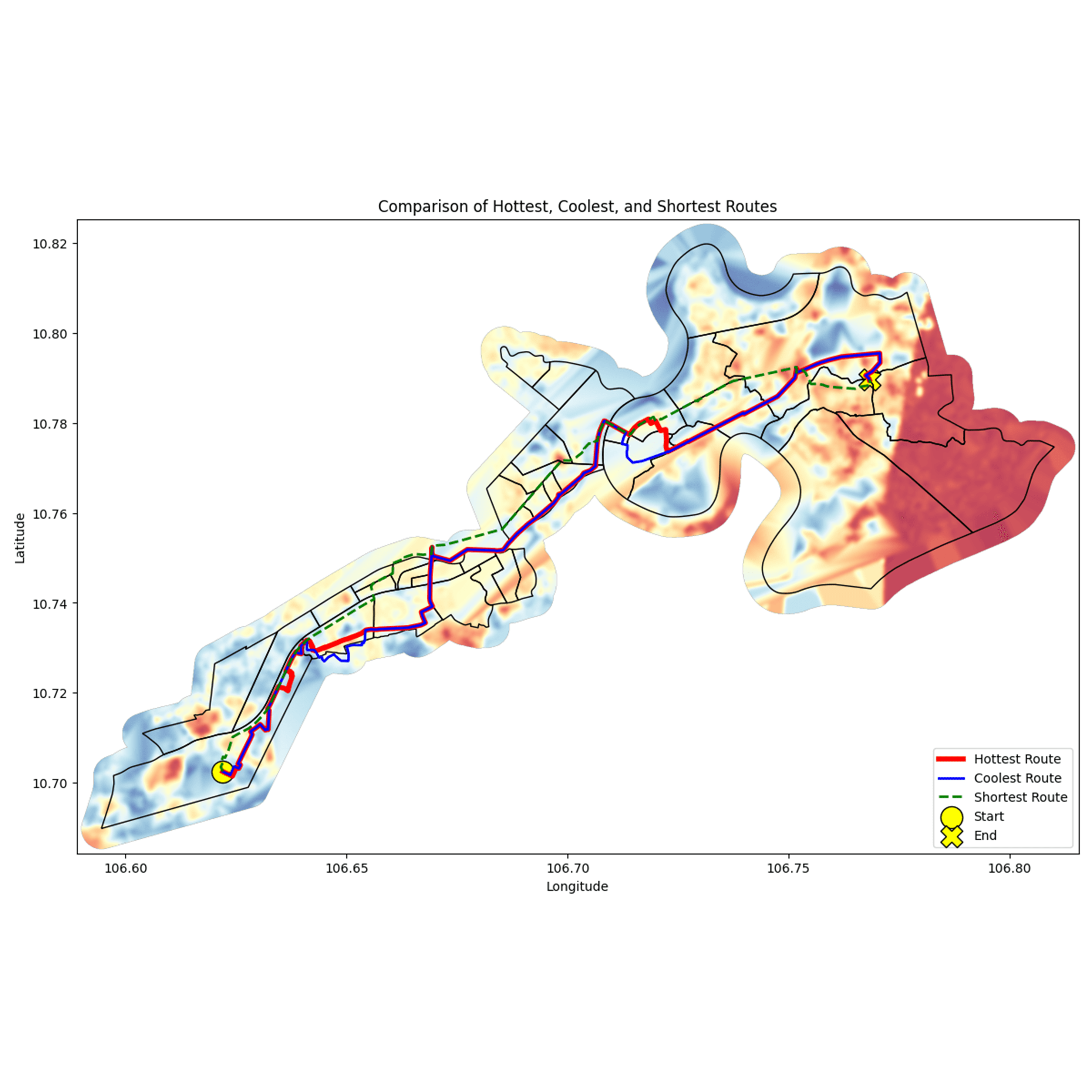
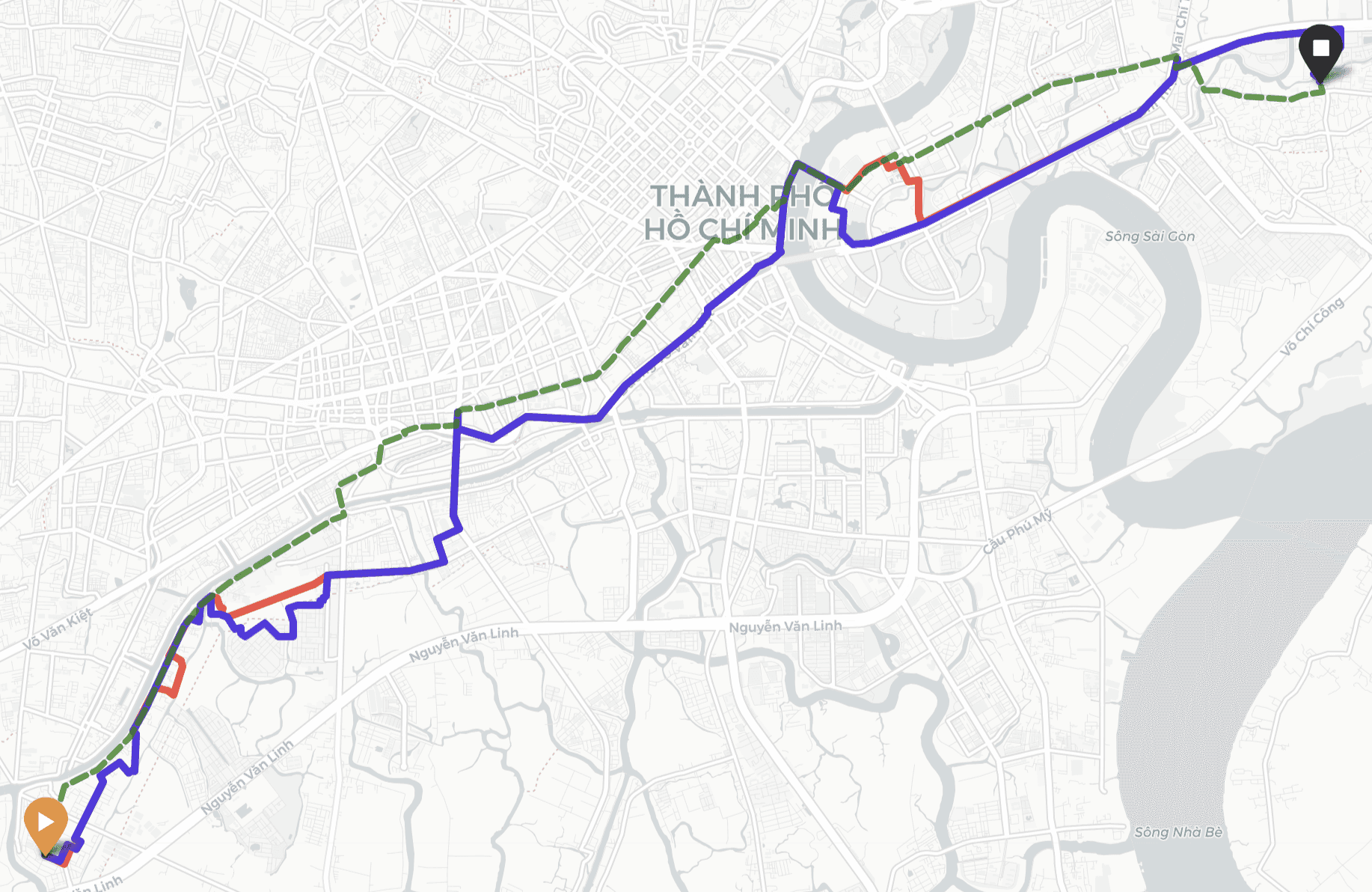
Routing Engine: The predictions are mapped onto an OSMnx-derived pedestrian network, utilizing Dijkstra’s algorithm with tunable parameters to calculate shortest, coolest, and hottest paths.
The analysis revealed that relying on cool routes imposes a significant burden on pedestrians. The study found that taking the coolest path in HCMC incurs an average 26.5% distance penalty (adding ~5.8km to a 22km journey) to achieve a marginal temperature reduction of 0.43 C. This finding underscores that heat exposure is a structural inequity rather than a navigational choice. Technically, the model demonstrated robust transferability, achieving an R2 of 0.70 on held-out wards, confirming that identifying "hot corridors" is statistically reliable even in areas not seen during training.
Hot Hẻm functions as an infrastructural triage tool for urban planning. Instead of serving merely as a navigation app for users, it provides a hottest route optimization that identifies continuous corridors of maximum thermal stress. This allows city officials to move beyond static heat maps and visualize heat as a mobility network, pinpointing exact street segments where shading infrastructure and green investments will yield the highest return on public health and thermal equity.
Role
Researcher
Tess Vu
Client
N/A
Keywords
Computer Vision, Dijkstra's Algorithm, GPU, Image Segmentation, Mask2Former, Parallel Programming, XGBoost
other works