about
At the end of the day, drug-use and related criminal activity as defined by the law is because communities are under-resourced due to historical, persistent disinvestment and malicious segregation and policies. Issues like this are far beyond what only relying on technology and numbers can do.
This project investigates spatial disparities in public health infrastructure across two distinct scales: statewide hospital accessibility in Pennsylvania and neighborhood-level resource allocation for substance use in Philadelphia. The primary objective is to evaluate spatial equity—determining whether vulnerable populations (defined by low income, advanced age, or high substance use incidence) disproportionately lack access to critical care. By integrating demographic data from the American Community Survey (ACS) with municipal facility locations, the study aims to pinpoint specific gaps in the social safety net that require targeted intervention.
The analysis utilizes the R statistical computing environment, leveraging the sf package for vector-based spatial operations and tidyverse for data manipulation. Key methodological steps included fetching census data via the tidycensus API, normalizing demographic variables to identify vulnerable tracts based on statistical quartiles, and transforming datasets into localized Coordinate Reference Systems (e.g. PA South) for high-precision distance measurement. The core technical workflow involved generating distance matrices to calculate the proximity of tract centroids to the nearest hospitals, treatment centers, and harm reduction sites, alongside spatial joins to quantify resource density within high-incidence zones.
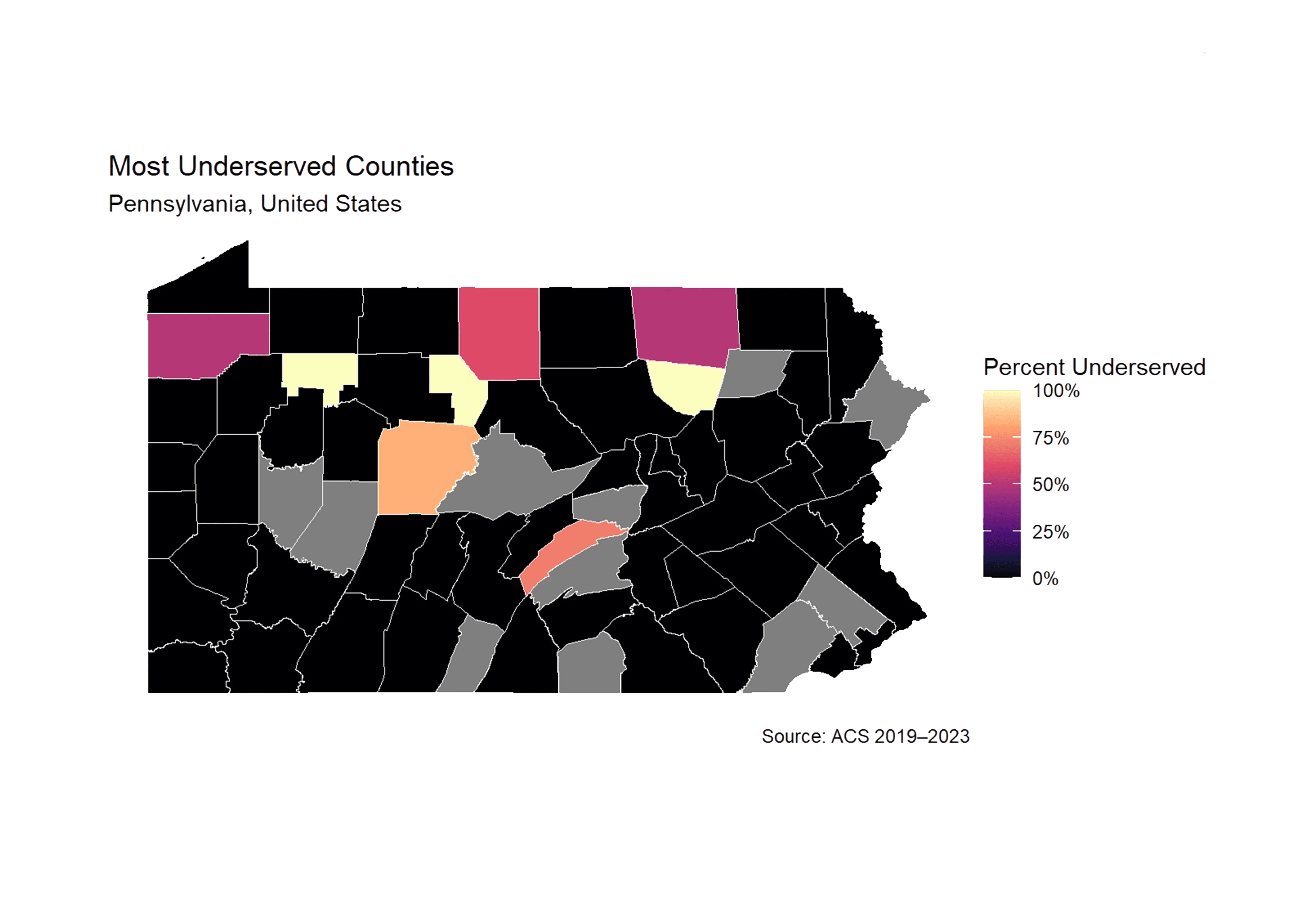
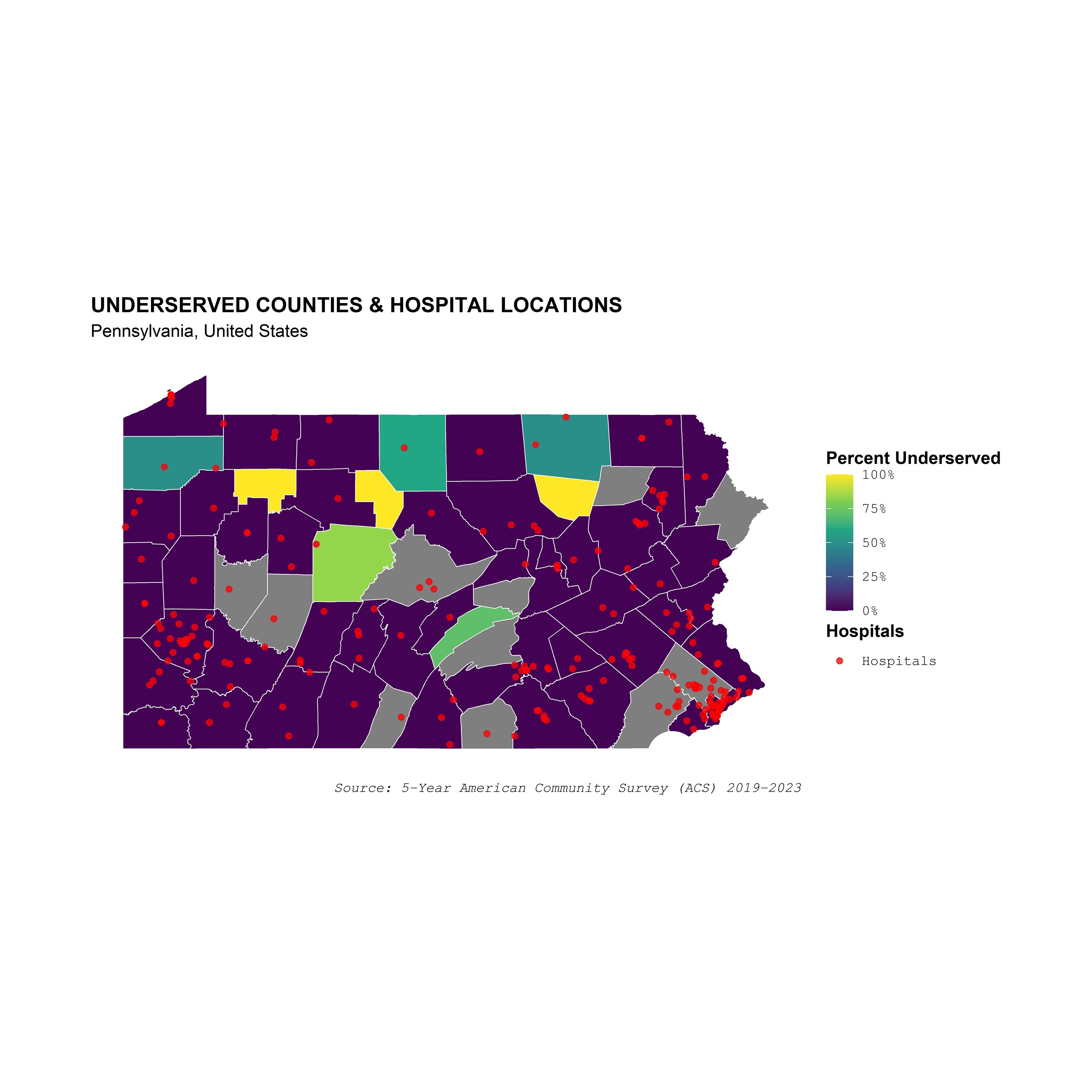
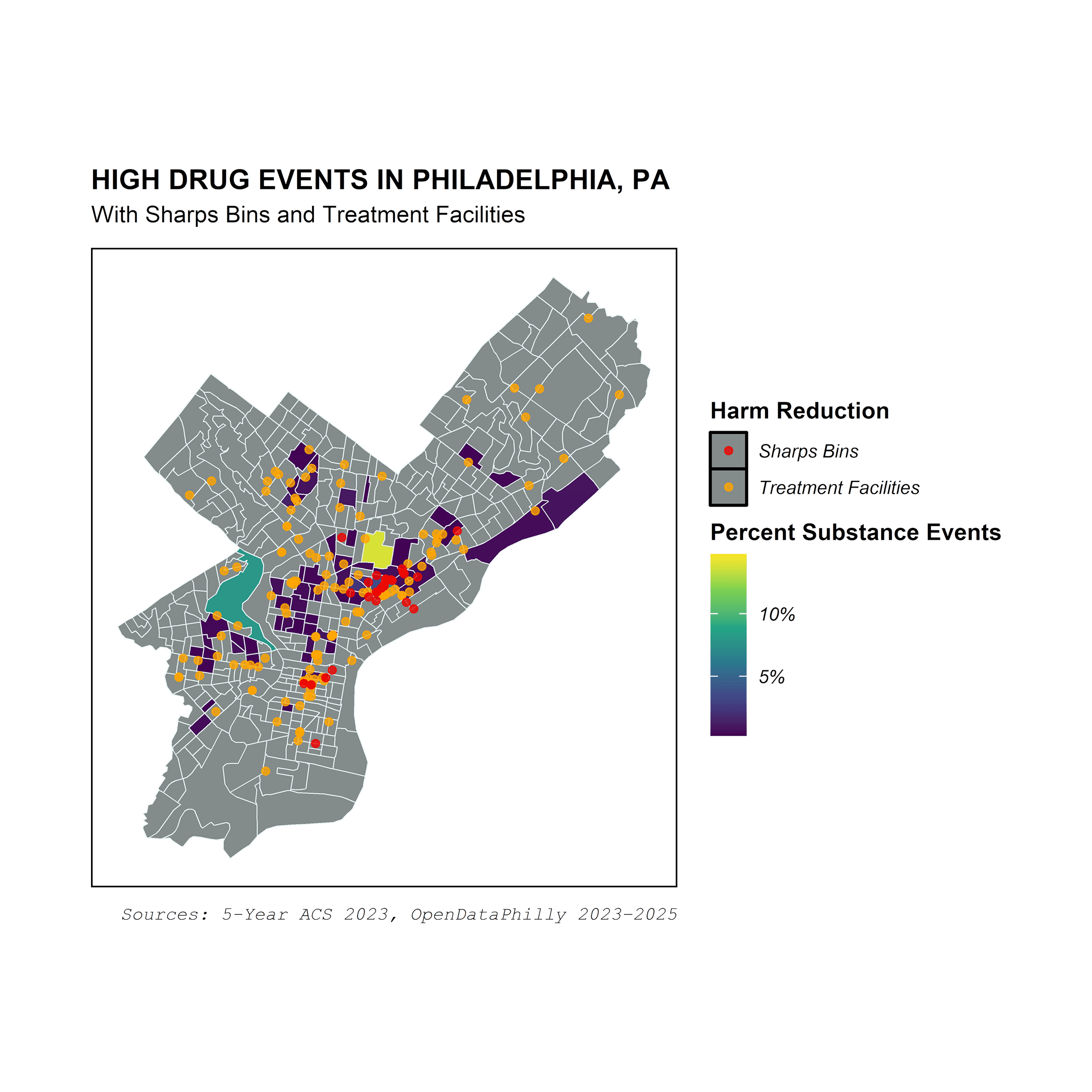
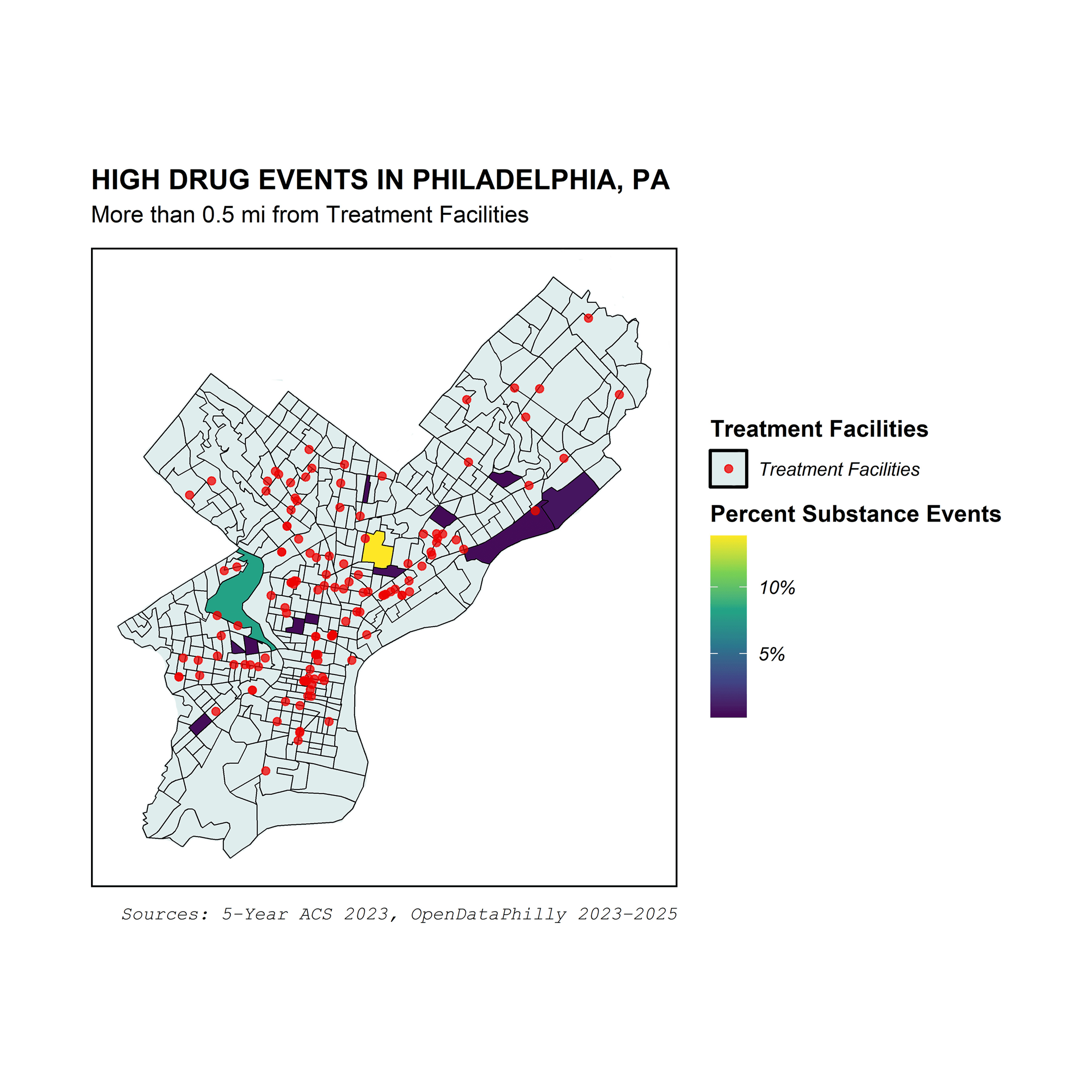
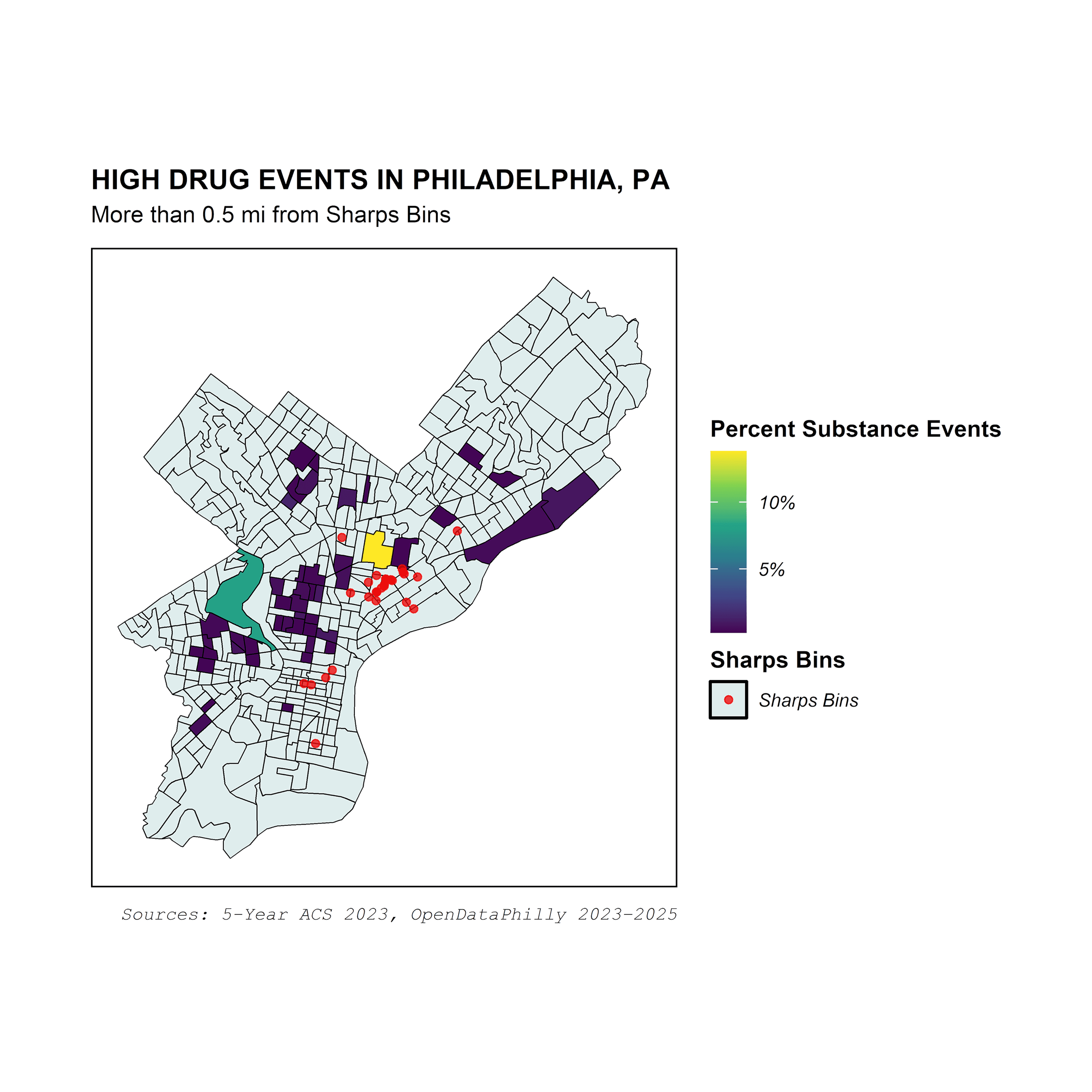
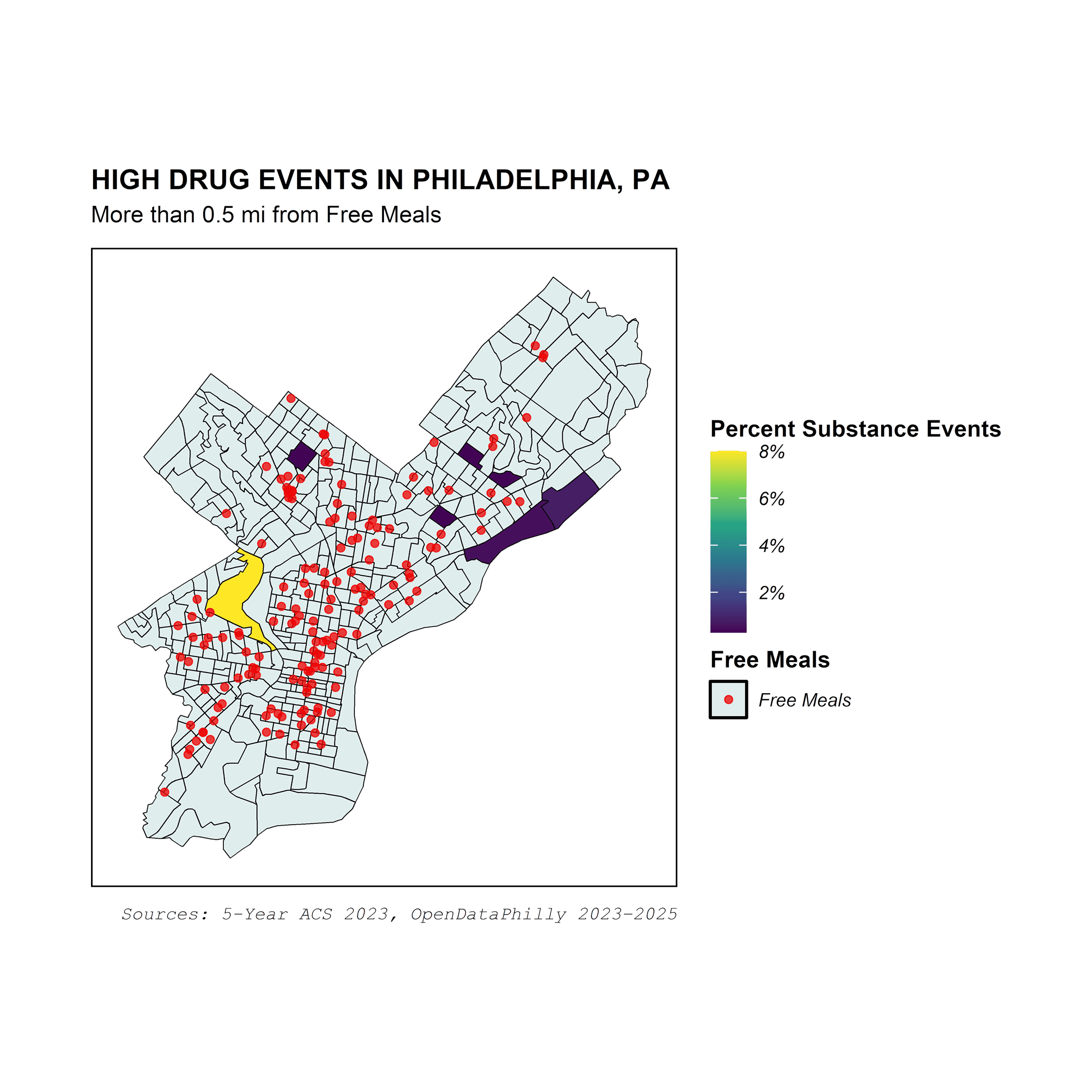
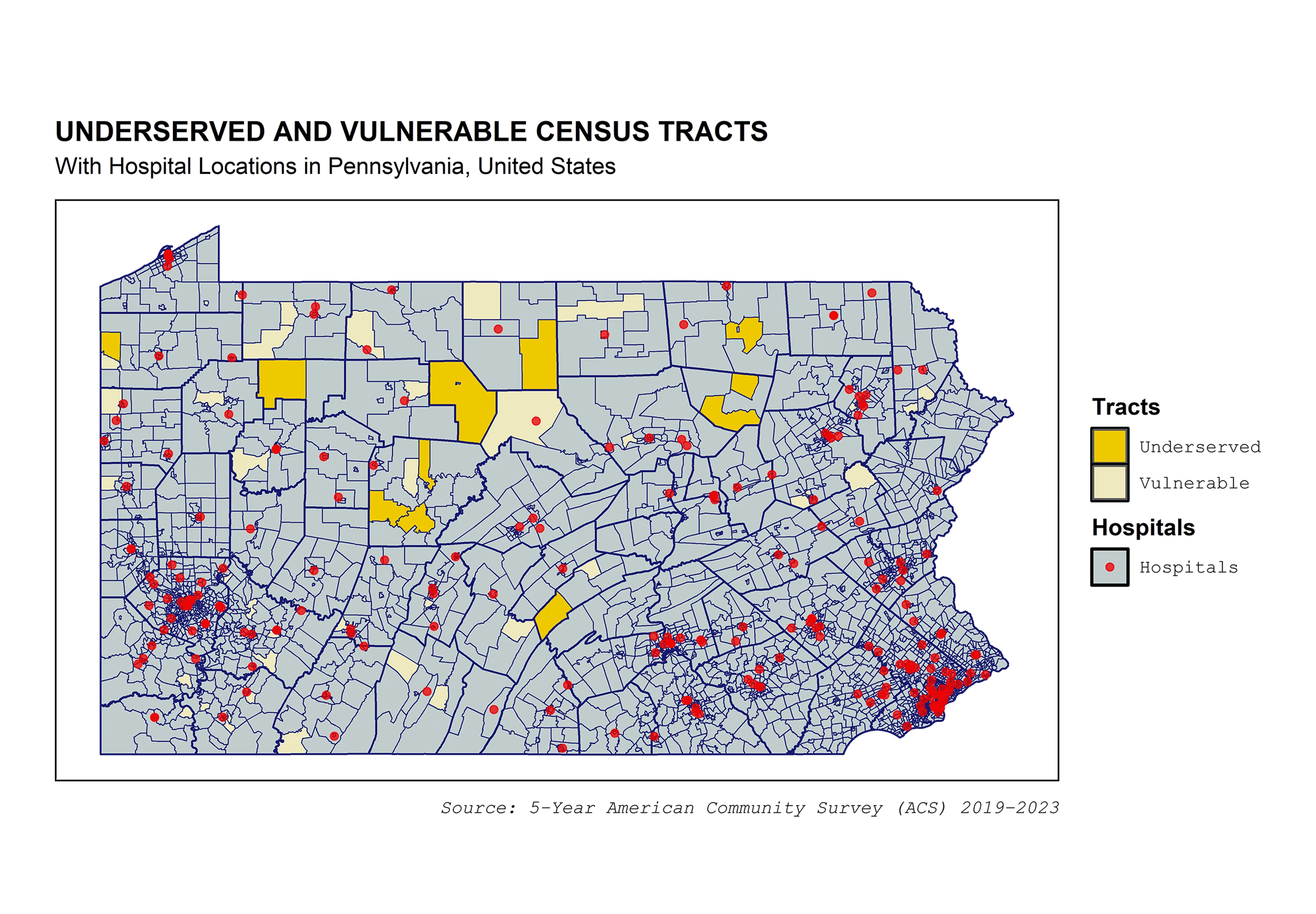
The results reveal significant geographic disparities in service provision. At the state level, the analysis identified a cluster of underserved, high-vulnerability counties in Northern Pennsylvania where elderly and low-income populations reside significantly farther from acute care than the state average. Conversely, the urban analysis of Philadelphia found that while food programs and treatment facilities generally align with areas of high substance use, there is a statistical lack of spatial overlap for sharps disposal bins. These findings highlight physical barriers to health equity, suggesting that proximity to care is often inversely related to demographic need in specific sub-regions.
Practically, this workflow serves as a robust decision-support tool for urban planners and public health officials. The resulting code and visualizations provide a data-driven foundation for site suitability analysis—identifying precise coordinates for new clinics or mobile harm reduction units to maximize impact. By moving beyond simple density maps to measure specific travel burdens (e.g. walking distance constraints for urban populations vs. driving distance for rural populations), the project offers a reproducible blueprint for optimizing resource allocation and improving service delivery efficiency.
Role
Applied Researcher
Tess Vu
Client
N/A
Keywords
Geospatial Visualization, Health Analytics, Urban Analytics
other works