about
Extreme heat weather is one of the deadliest environmental hazards in the United States, the heat extreme heat events have significant negative impacts on urban public health and urban sustainable development. In dense, urban metropolitan cities like New York, extreme heat interacts with not just the built environment and local infrastructure conditions, but also the socioeconomic climate—extreme heat acts as one of the many architects shaping where service disruptions, complaints, and other surrounding stressors occur, degrading quality-of-life (QoL) for urban residents.
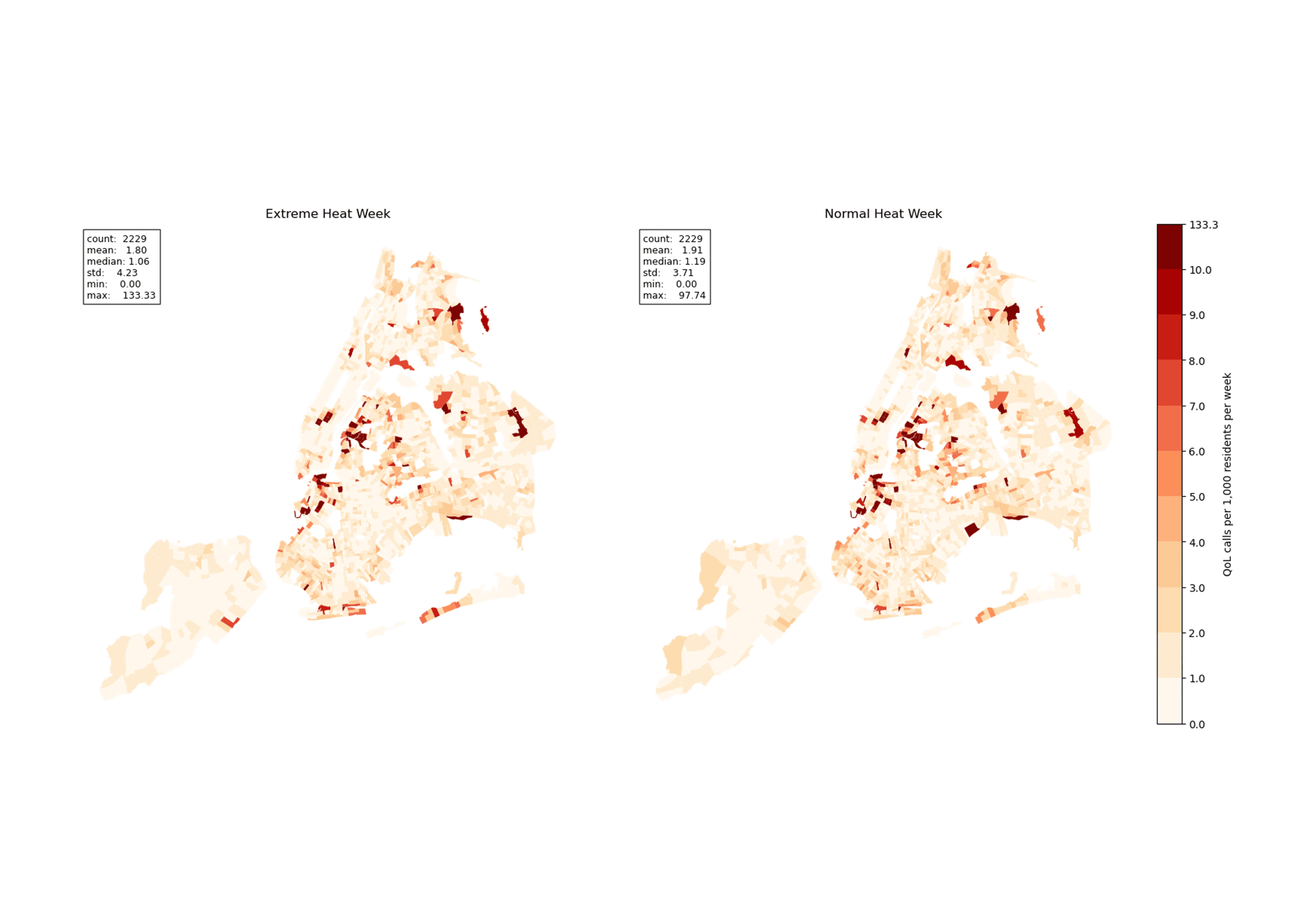
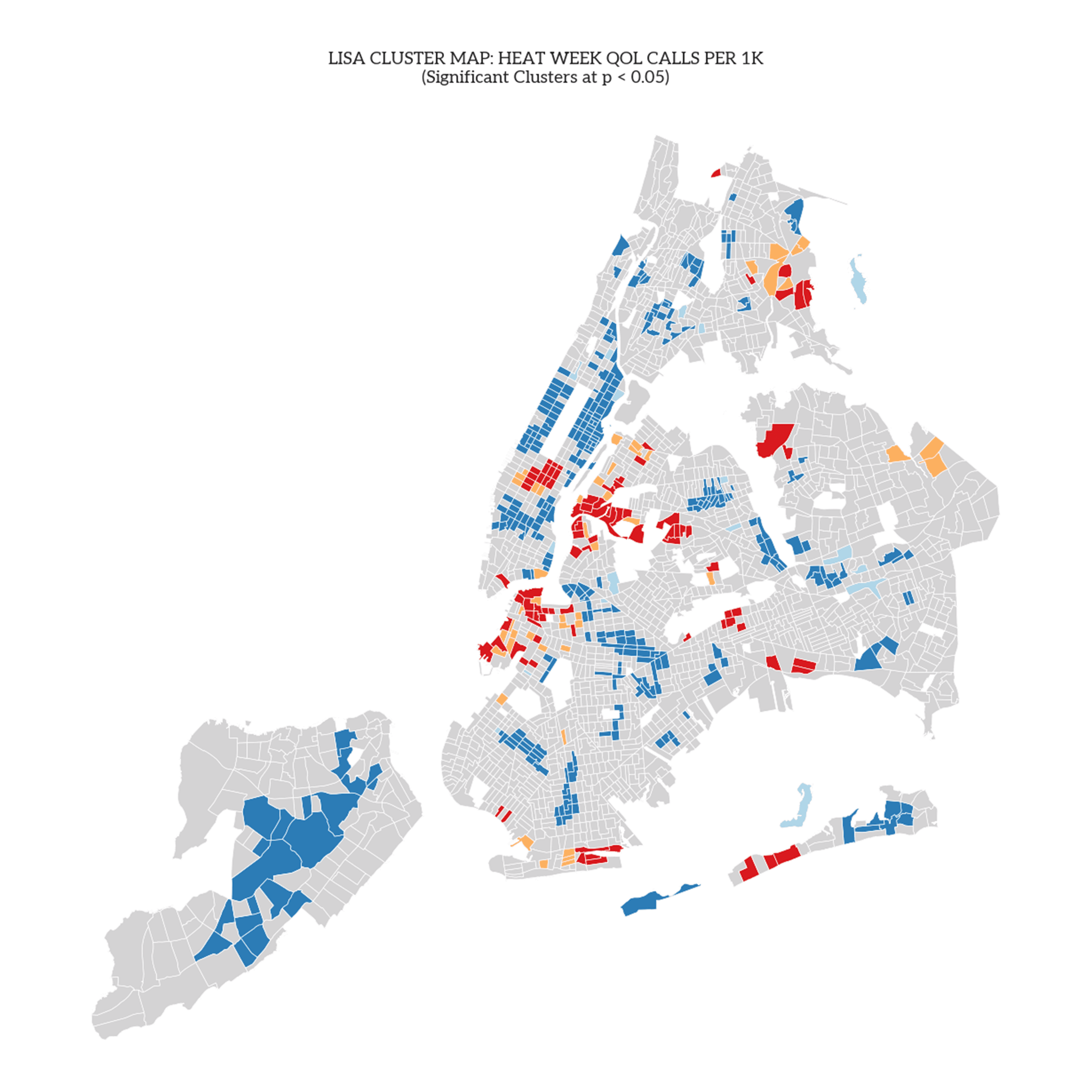
Within the context of this degradation is New York City’s 311 service, a complaint system that accepts reports via calls, emails, and website submissions that can reflect heat induced QoL behavior; it is a granular, real-time lens that provides understanding of how heat-related aggravation and other aspects can translate into observable, negative resident sentiment. This project in particular seeks to connect extreme heat versus normal heat weeks with environmental factors, socioeconomic conditions, and urban morphology to potentially explain QoL issues by different factors and their different performance during hotter periods.
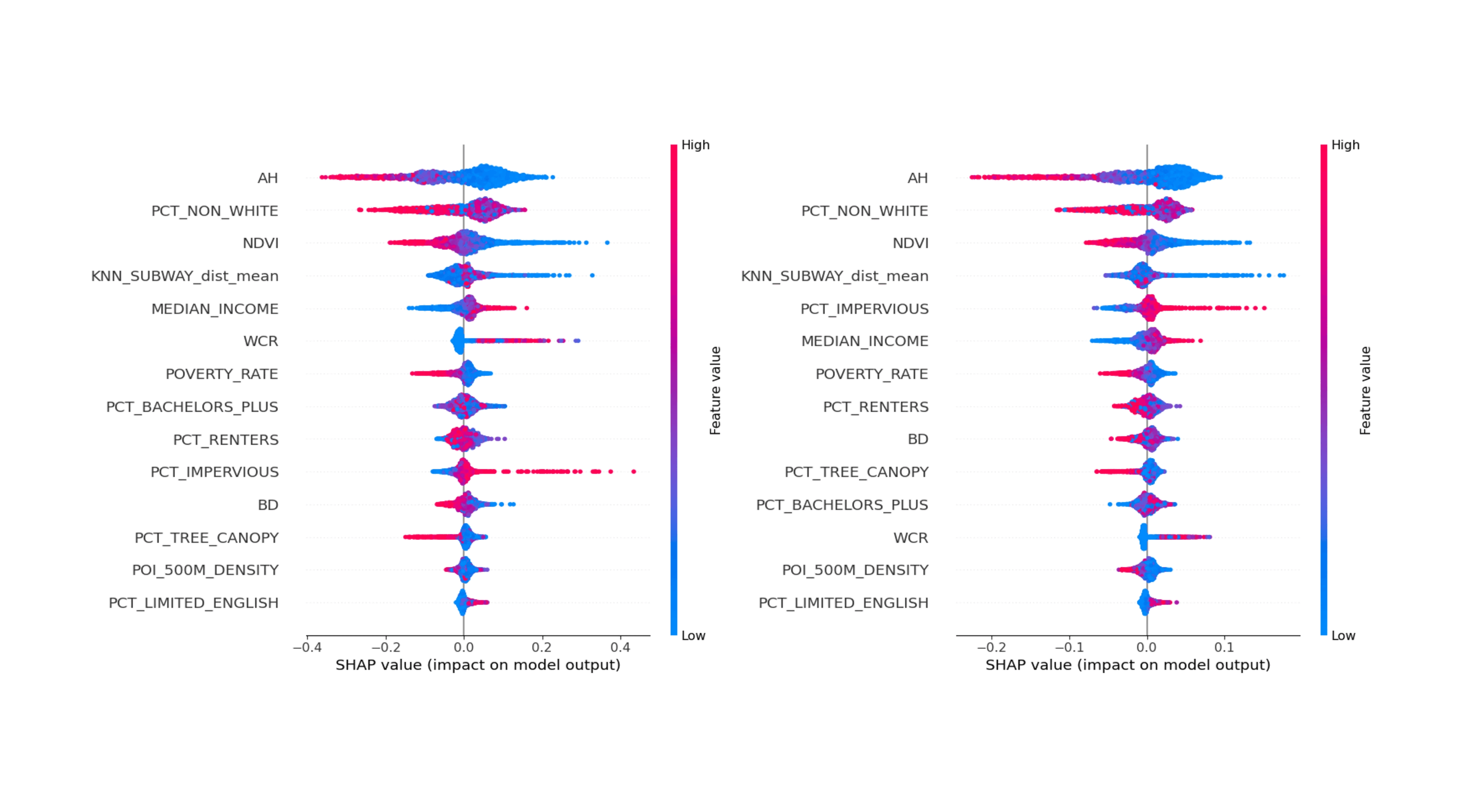
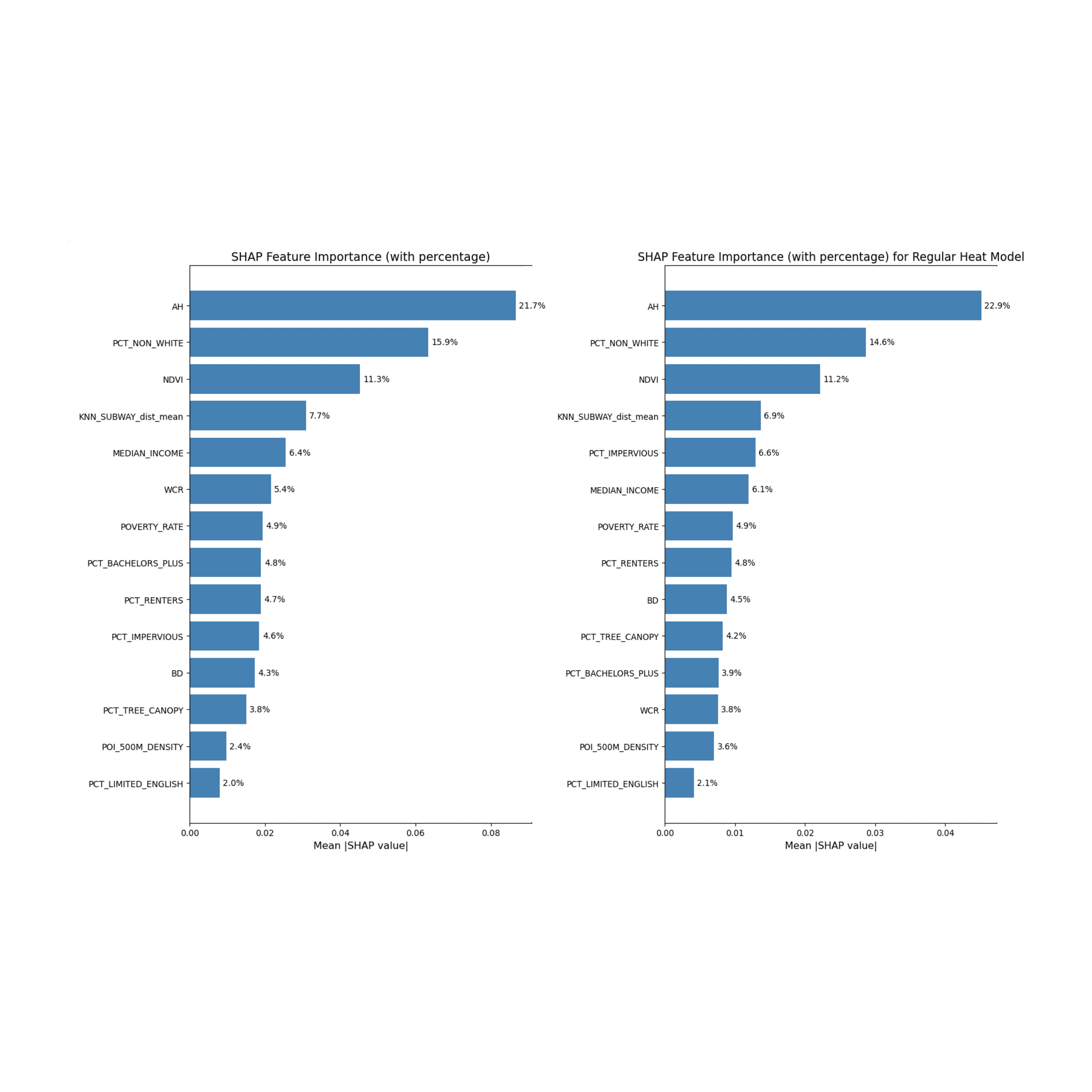
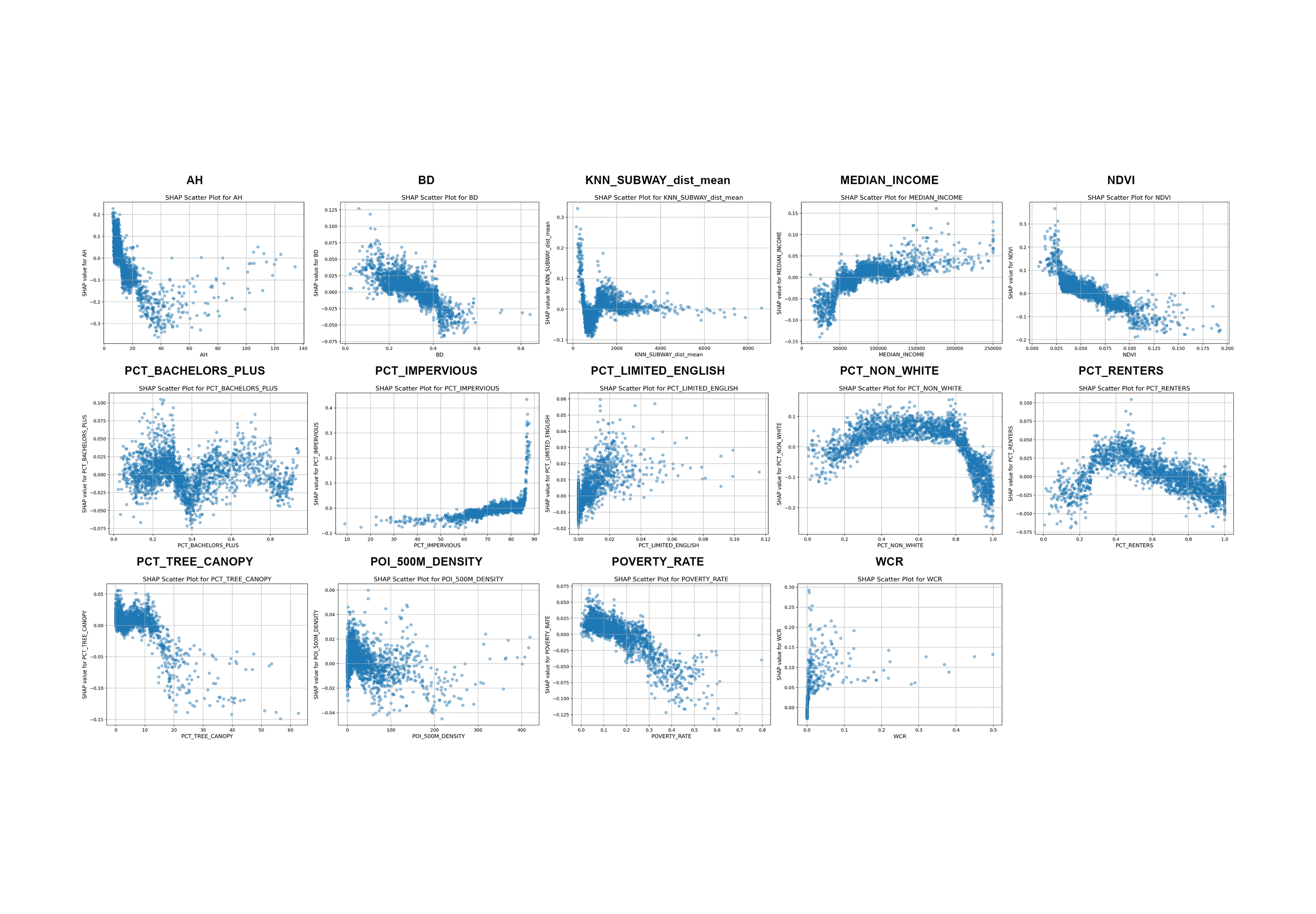
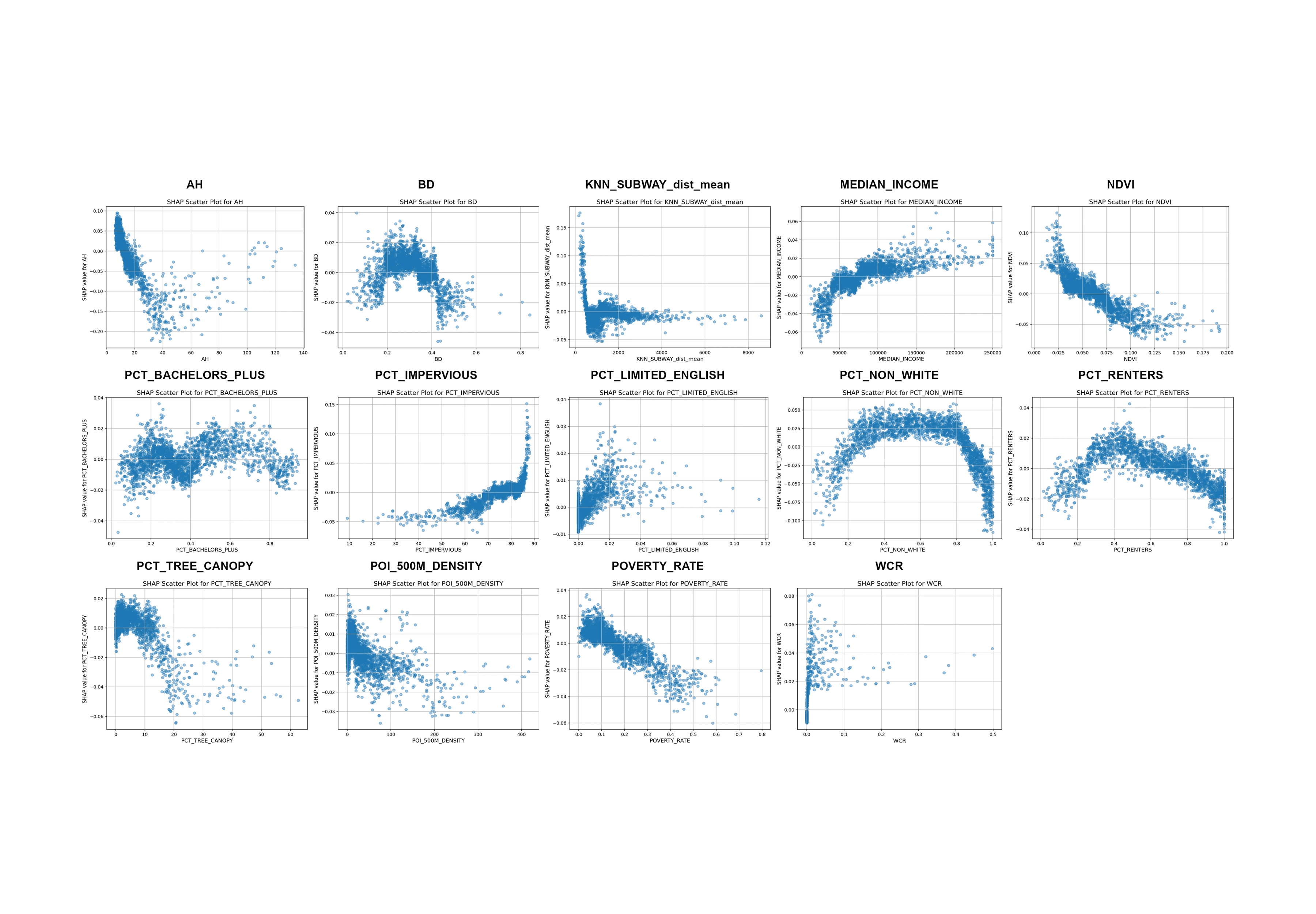
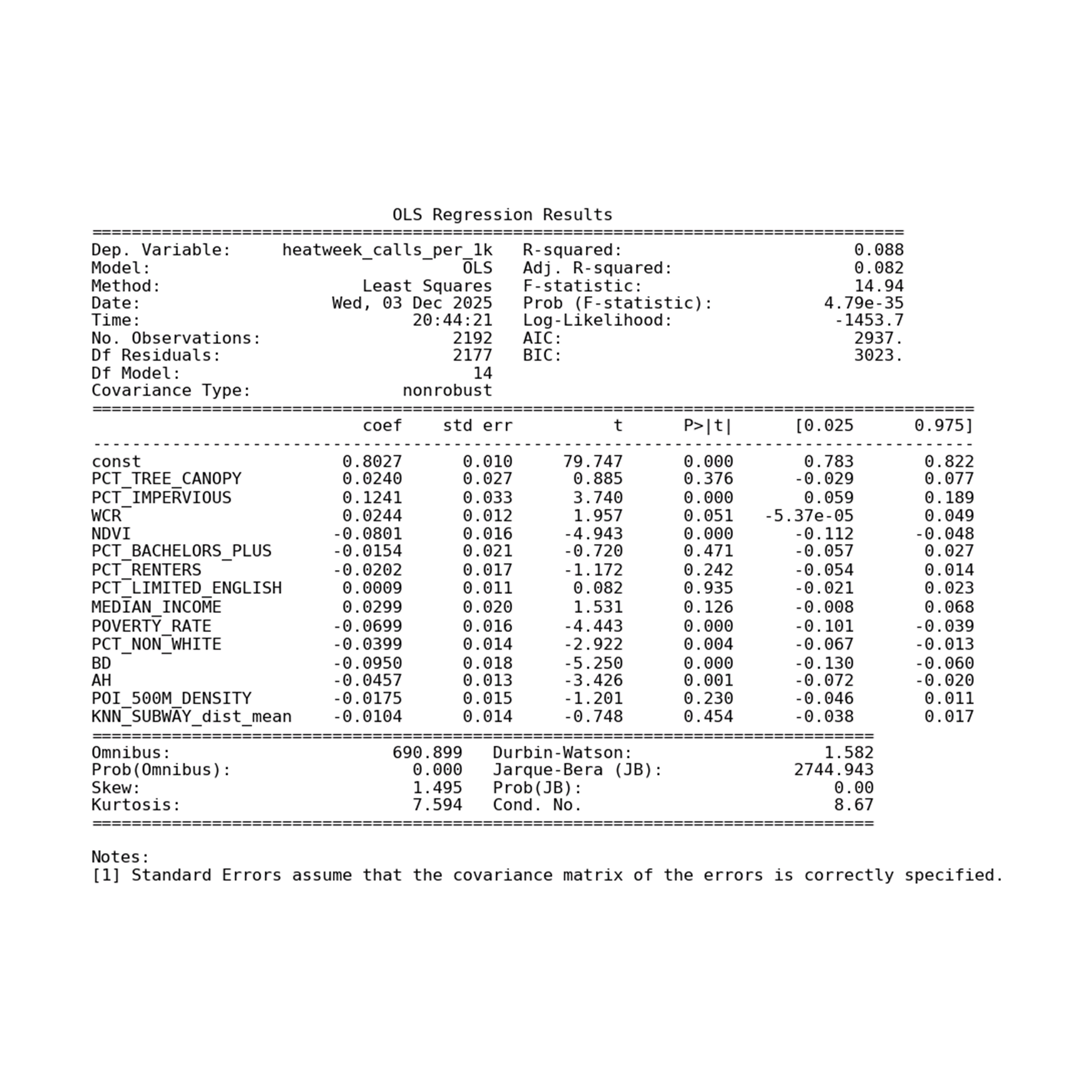
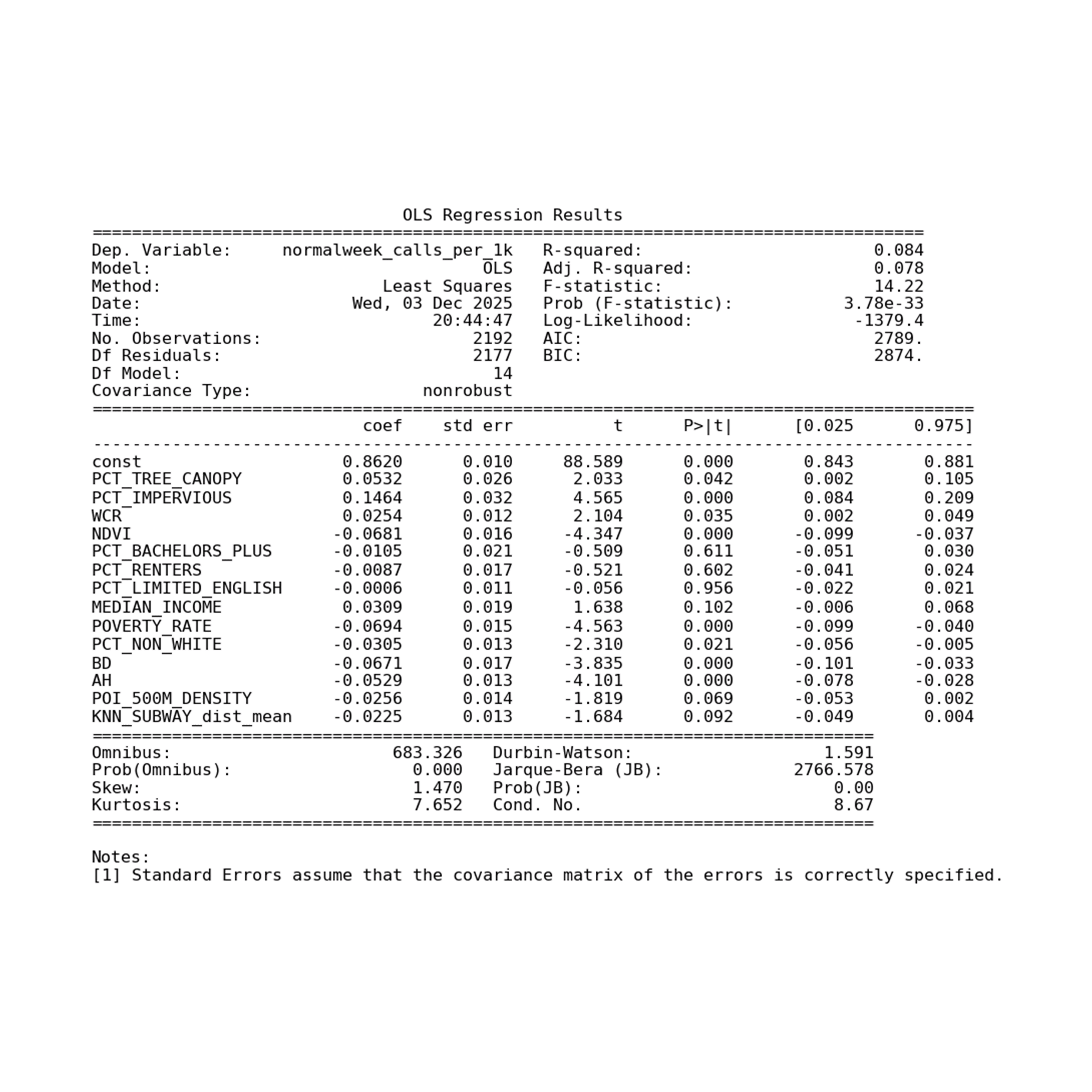
In this regard, the project is built upon geospatial data science techniques for modeling weekly QoL outcomes in extreme heat and normal heat conditions, as proxied by selected 311 report categories, using ordinary least squares (OLS) regression modeling as a baseline followed by modern machine learning (ML) models, and SHapley Additive exPlanations (SHAP) method to interpret.
Role
Researcher
Tess Vu
Researcher
Mark Deng
Client
N/A
Keywords
EDA, Explanatory Modeling, OLS, Random Forest, SHAP, Web Development
other works